
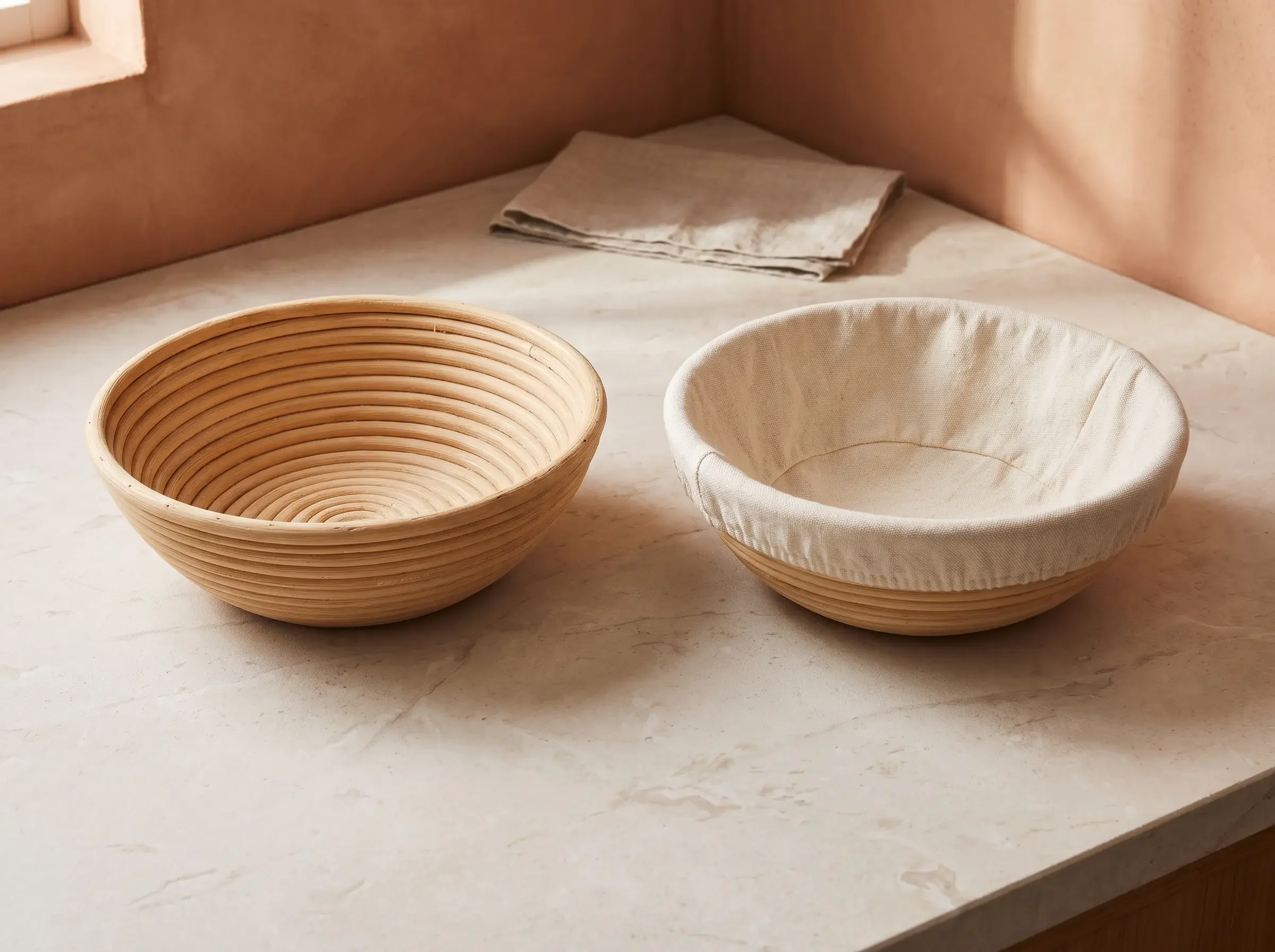
Choosing a banneton with or without liner is not about finding the one correct method. It is about choosing the crust look and handling feel you want from that loaf.
Proof directly in the rattan when you want the classic sourdough spiral pattern. Use the cloth liner when you want a smoother surface, clearer decorative scoring, or a little more reassurance with stickier dough. Same dough style. Same basket shape. Two very different looks.
Key Takeaways
No liner gives the most visible rattan rings and a rustic banneton finish.
A cloth liner creates a smoother crust surface for leaf, wheat, and decorative scoring.
Both methods are valid, and every RattanVibe banneton includes a free liner so you can test both looks.
How Should You Compare a Banneton With or Without Liner?
Compare two similar loaves by changing only one visible proofing choice: one dough rests directly in the rattan, and the other rests inside the cloth liner. This keeps the focus on crust pattern, surface smoothness, scoring visibility, and release confidence.
This is a practical home-bake comparison, not a laboratory test. The point is not to prove that one method is better. It is to help you see which finish matches the loaf you want to bring to the table.
What Should the Side-by-Side Crust Photo Show?

Start with the same basket shape so the liner choice stays easy to see.
A strong side-by-side crust photo should show the main difference immediately: the bare-rattan loaf has clearer spiral rings and more texture, while the liner-proofed loaf has a smoother crust with more open space for scoring.
| Comparison point | No liner | With cloth liner |
|---|---|---|
| Crust pattern | Visible rattan rings and basket texture | Little or no basket imprint |
| Surface | Rustic and textured | Smoother and cleaner |
| Scoring visibility | Cuts share attention with the spiral pattern | Decorative cuts stand out more clearly |
| Overall style | Classic banneton look | Refined scoring canvas |
A helpful photo set shows both finished loaves from above, then close-ups of the crust. On the no-liner loaf, the eye goes first to the sourdough spiral pattern. On the liner loaf, the eye goes first to the score marks and overall shape.
That is the whole decision in one image. Do you want the basket to leave its signature, or do you want the dough surface to stay visually quiet?
## What Happens When You Proof With No Liner?
Proofing directly in the rattan produces the signature sourdough spiral pattern. It gives the loaf a classic, handmade look where the banneton itself becomes part of the final crust design.
What Changes When You Use the Cloth Liner?
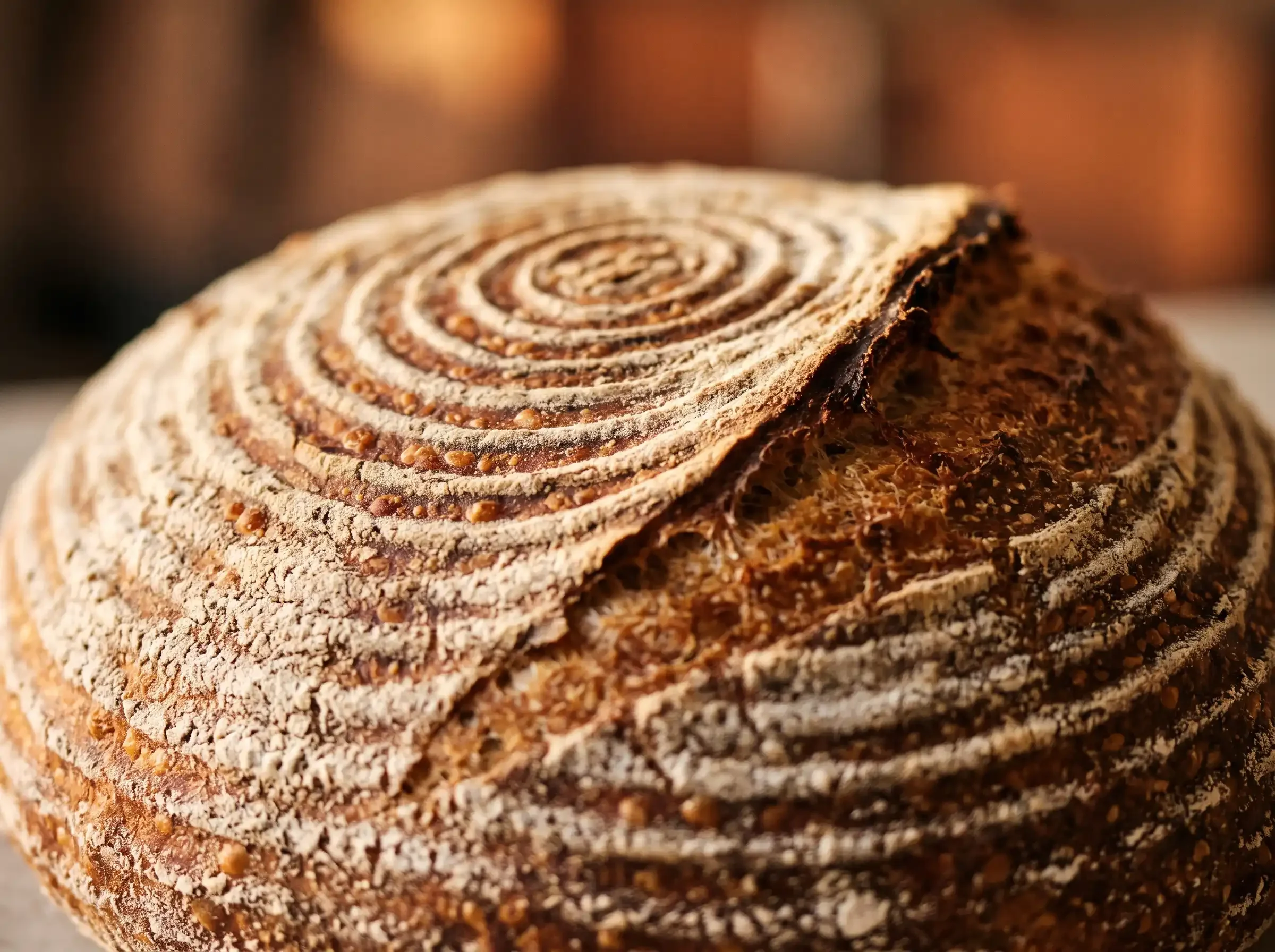
liner-proofed close-up
A cloth liner reduces the basket imprint and leaves a smoother crust surface. That makes a liner useful when you want decorative scoring to be the main visual feature, not the rattan rings.
Think of the proofing basket liner as a softer visual layer between the dough and the basket. The loaf still gets shaped and supported, but the finished crust usually looks calmer. Instead of strong circular ridges, you get a cleaner surface.
That smoother surface can help intricate scoring stand out. Leaf cuts, wheat patterns, curved lines, and small decorative slashes are easier to see when they are not crossing a strong basket pattern. If scoring is the star of your bake, the cloth liner banneton setup gives your design more room.
A liner can also feel more reassuring with stickier or higher-hydration dough because there is an extra fabric layer between the dough and the rattan. Just do not treat it as a promise of perfect release every time; dough behavior still depends on handling, hydration, timing, and basket care.
If you are practicing decorative cuts, pair this liner choice with your scoring routine. A smooth crust will not make the cuts for you, but it can make the finished design easier to read.
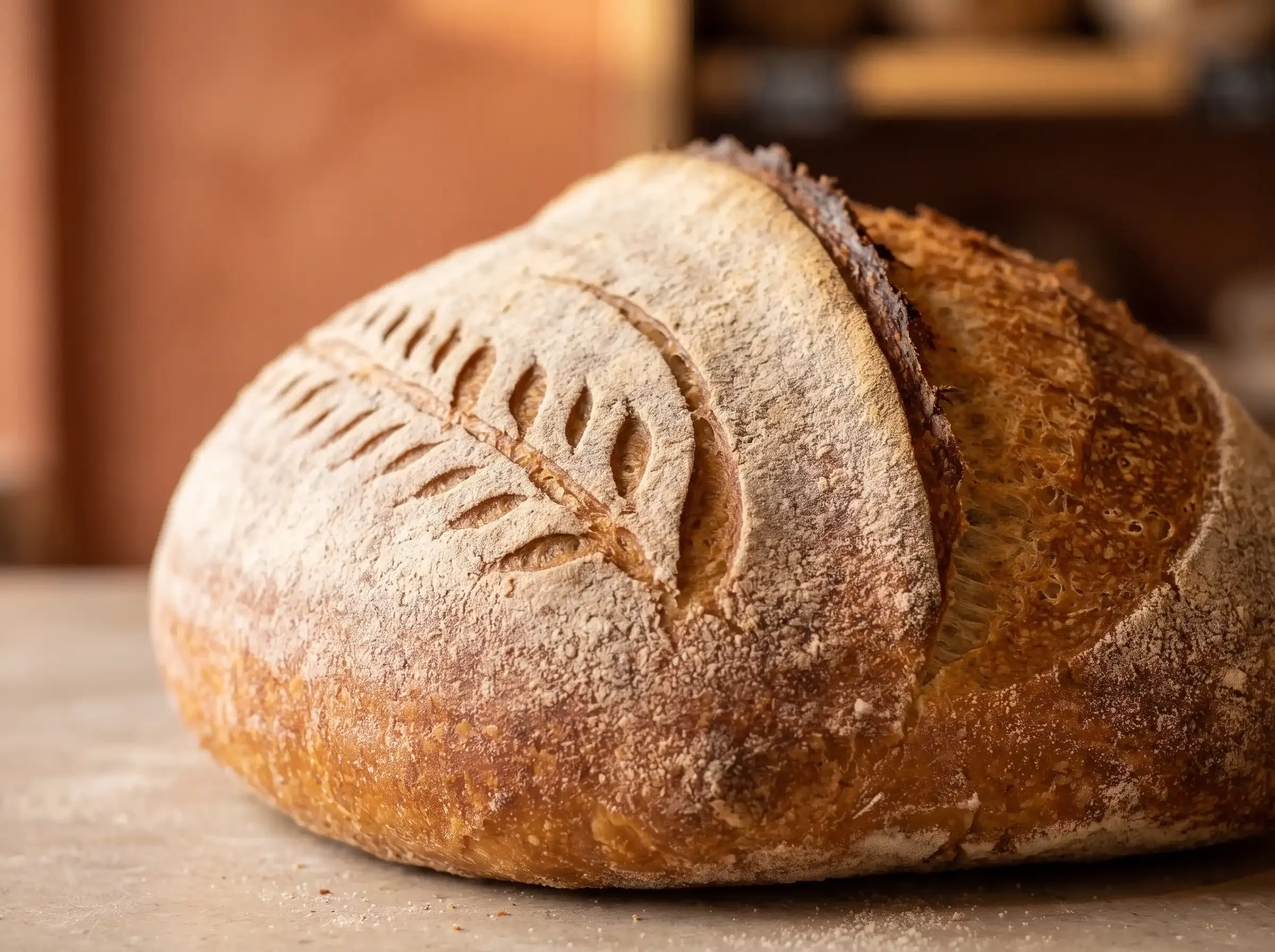
No-liner-proofed close-up
Which Loaf Looks More Artisan?
Neither loaf is automatically more artisan. Bare-rattan rings feel classic and handmade, while a smooth liner-proofed crust can feel refined and designed around the score.
So ask a better question: what do you want people to notice first? If you want a recognizable banneton signature, proof directly in the rattan. If you want the scoring to carry the design, use the liner.
For a casual table loaf, the spiral pattern often feels rustic and familiar. For a gift loaf, dinner loaf, or loaf you plan to photograph, the liner can create a more polished canvas. Both can look beautiful. The choice is about presentation, not skill level.
Which Setup Feels More Practical?
Use bare rattan when the spiral pattern is the priority. Use the liner when smoother release, a cleaner crust surface, or extra reassurance with sticky dough matters more than the visible basket imprint.
If dough sticks, treat the liner as one helpful variable rather than the whole solution; release can also depend on dough handling, hydration, proofing timing, basket condition, and surface preparation.
This is where having both options matters. Every RattanVibe banneton includes a free liner, so you do not have to choose one method forever. Try the basket bare for the classic rings. Then try the same dough style with the liner and compare the finish.
If you bake often and want a backup for rotation, replacement, or separate doughs, choose a [proofing basket liner](https://www.rattanvibe.com/shop/p/proofing-basket-liner) that matches your existing basket shape and size.
How Can You Run Your Own Two-Loaf Photo Test?
You can run your own test by keeping the dough and basket shape consistent, changing only the liner use, and photographing both loaves before and after baking.
Here is a simple plan:
1. Prepare two comparable portions of the same dough.
2. Use the same basket shape for both loaves.
3. Proof one loaf directly in the rattan.
4. Proof the other loaf inside the cloth liner.
5. Photograph both loaves immediately after turning them out.
6. Photograph both again after baking.
7. Compare ring definition, smoothness, scoring visibility, overall style, and release..
What Does the Banneton With or Without Liner Photo Test Mean?
A liner is optional. Use the basket bare for spiral rings, or use the liner for a smoother crust surface, clearer decorative scoring, and extra reassurance with sticky dough.
Do I have to use a liner with a banneton?
No. You can proof directly in the basket or use the cloth liner. Both choices are normal. The bare basket gives more visible rattan texture, while the liner creates a smoother surface and changes how the crust looks.
Will proofing without a liner always show spiral rings?
Proofing without a liner is the method intended to create the rattan imprint, but the exact result can vary. Dough surface, proofing conditions, basket shape, and handling all affect how clear the sourdough spiral pattern appears.
Does a cloth liner change the scoring appearance?
Yes, mainly visually. A cloth liner gives the dough a smoother proofing surface, so decorative scoring often appears clearer on the finished crust. It does not guarantee better oven spring, crumb, or bread quality.
Should I buy extra liners?
Use the liner included with your banneton first. If you bake often, proof multiple loaves, or want a backup while one liner dries, an extra cloth banneton liner can make the routine easier.
Final Takeaway
The banneton with or without liner decision is a style and handling choice, not a rule. No liner gives you the classic rattan rings. A liner gives you a smoother surface for scoring and a little more confidence with stickier dough.
Start with the free liner included with your RattanVibe banneton. Test both looks with the same dough style, then keep the method that matches the loaf you want to bake next.
FAQ
Do I have to use a liner with a banneton?",
No. You can proof directly in the basket or use the cloth liner. Both choices are normal. The bare basket gives more visible rattan texture, while the liner creates a smoother surface and changes how the crust looks.
Will proofing without a liner always show spiral rings?
Proofing without a liner is the method intended to create the rattan imprint, but the exact result can vary. Dough surface, proofing conditions, basket shape, and handling all affect how clear the sourdough spiral pattern appears.
Does a cloth liner change the scoring appearance?
Yes, mainly visually. A cloth liner gives the dough a smoother proofing surface, so decorative scoring often appears clearer on the finished crust. It does not guarantee better oven spring, crumb, or bread quality.
Should I buy extra liners?
Use the liner included with your banneton first. If you bake often, proof multiple loaves, or want a backup while one liner dries, an extra cloth banneton liner can make the routine easier.