
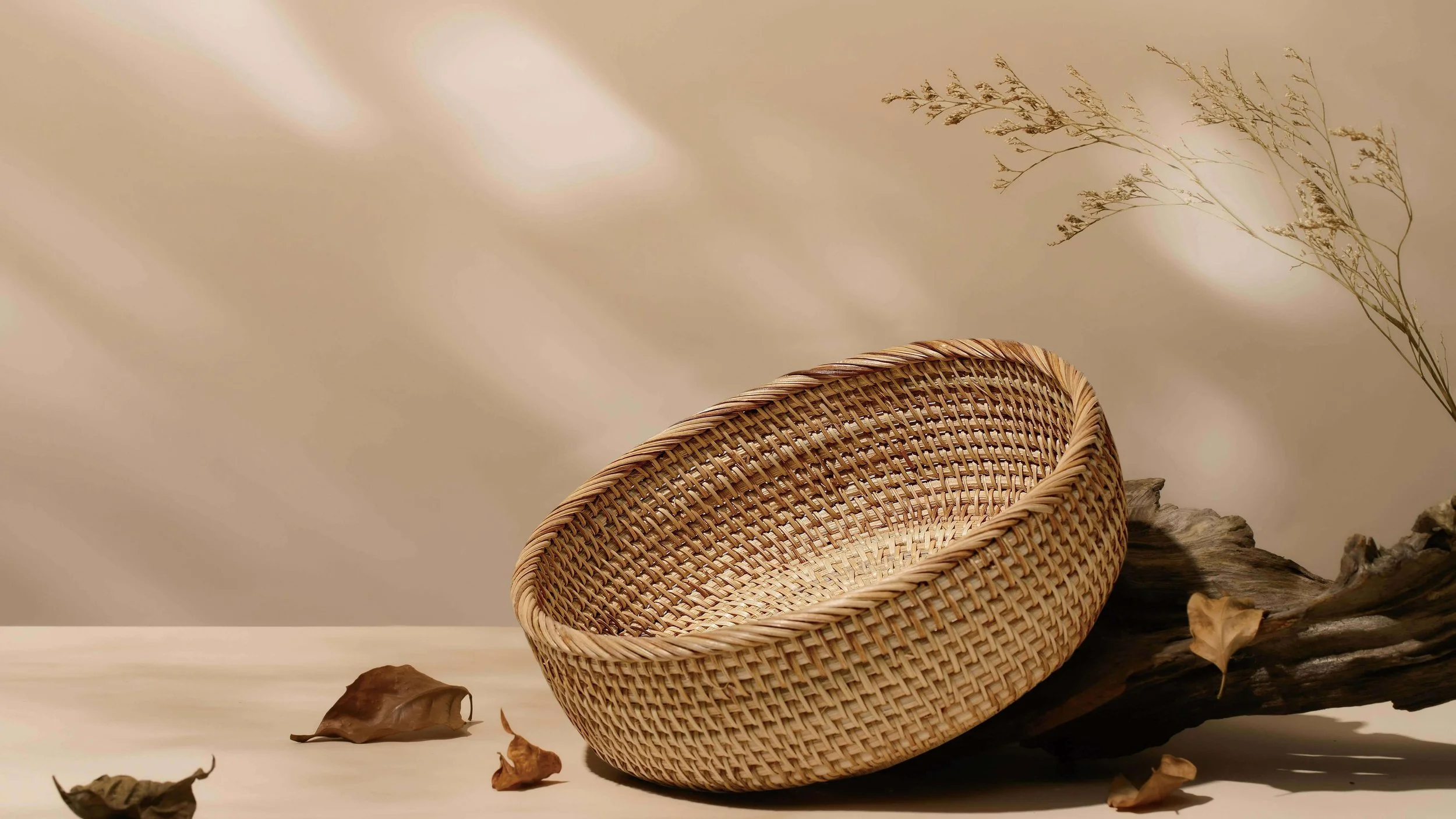
Before a rattan banneton rests on a kitchen shelf, it begins as a strand with bend, grain, and memory. In a weaver’s hands, that strand becomes structure. Coil follows coil. Tension is adjusted by feel. A rim is finished not only to hold its shape, but to feel right when lifted.
That is the RattanVibe craft code: material, hands, time, and home.
We believe everyday kitchen objects should do more than serve a task. They should carry texture, usefulness, and evidence of care. For bakers, gift givers, and anyone drawn to natural materials, handwoven rattan baskets offer something factory-perfect tools rarely do: a visible connection between the object, the maker, and the home that uses it.
Material First: The Start of Handwoven Rattan Baskets
Rattan is where the story begins because it already carries the qualities we want in a kitchen object: lightness, flexibility, strength, and a warmer surface than industrial materials. It is not blank. It has tone, grain, and small variations that show its natural character before it becomes part of a home.
For RattanVibe, material is not decoration added at the end. It shapes the object’s purpose and mood. Natural rattan brings structure to bread proofing and tactile softness to storage, gifting, and display. It feels practical without feeling cold.
This is why woven rattan belongs in kitchens built around simple rituals. It sits beside flour, linen, wood, fruit, and cooling bread without demanding attention. It adds texture in a way that feels useful first and beautiful second.
For us, sustainable kitchen tools begin with a simple instinct: choose natural, useful pieces that feel worth keeping, using, and returning to. Not a slogan. Not a claim of measurable impact. Simply a preference for objects made with care.
What Do Hands Add to Rattan Weaving Craft?
Hands add judgment. A machine can repeat a form, but hands can read the material as it changes. They can tighten where the basket needs support, ease where the curve needs grace, and notice when an edge needs one more pass before it feels complete.
That is the value of artisan rattan. The pattern may repeat, but the piece does not feel anonymous. A handwoven basket carries small signs of attention: the angle of a strand, the firmness of a turn, the clean finish of a rim, the way the shape settles into balance.
We do not believe handmade objects need to look rough to feel real. The goal is not imperfection. The goal is life. A basket should feel steady, useful, and trustworthy, while still keeping the trace of the hands that shaped it.
Mass production can be efficient and consistent. There is a place for that. But in a kitchen built around sourdough, gifting, gathering, and slower routines, perfect sameness can feel flat. A woven piece gives the room a more human texture.
What do hands add that machines cannot? They add listening. They turn a natural strand into an object that still feels connected to touch.
Why Does Time Matter in How Bannetons Are Made?

Time matters because rattan weaving is not only about reaching a finished shape. Each stage adds trust. The material is prepared so it can bend. The base gives the basket its first structure. The sides rise in measured rows. The rim brings the whole form together.
A banneton’s journey from vine to kitchen is easy to miss once it sits on a counter. Yet that journey is why the finished piece has presence. Rattan has to be worked with, not forced. Its curve, firmness, and texture guide the pace.
Then comes repetition. Strand after strand. Circle after circle. A base becomes a wall. A wall becomes a vessel. A rim gives the basket its final line. The process is steady rather than rushed, and that steadiness can be felt in the finished object.
RattanVibe centers handwoven bannetons because bread baking already understands time. Dough rests. A loaf develops slowly. A basket that supports that process should feel aligned with it: practical, tactile, and patient in spirit.
Finally, there is the last kind of attention: the feel check. Does the shape hold? Does the rim sit cleanly? Does the object invite use? In a baking routine, those small details become part of daily confidence.
A made-to-last object carries the memory of this time. You may not see every stage, but you feel the result each time you lift it.
How Does Asian Rattan Weaving Inspire Our Point of View?
Rattan weaving has deep roots across many parts of Asia, where natural fibers have long been shaped into baskets, furniture, storage pieces, and everyday household forms. We approach that heritage with respect. It is not a trend to borrow from casually. It is a craft language built through patience, repetition, and lived skill.
RattanVibe is inspired by that broader tradition: the belief that useful objects can also be beautiful, and that beauty does not need to be loud. A woven basket can be humble and still hold meaning. A banneton can support bread and still bring texture to a shelf.
We do not need to invent a romantic backstory to honor the craft. The truth is enough. Rattan weaving asks for material knowledge, hand skill, and time. It rewards attention. It reminds us that kitchen tools can belong to a longer human story of making, using, keeping, and passing along.
That point of view shapes how we think about each RattanVibe piece. A basket should feel grounded. It should carry the character of natural material and the dignity of handwork, without needing to announce itself.
What Kind of Home Are We Weaving For?

We are weaving for homes where useful things are allowed to be beautiful. The kind of home where bread rests under cloth, fruit sits within reach, gifts are chosen with care, and kitchen shelves hold objects that feel personal rather than disposable.
For bakers, a rattan banneton becomes part of a ritual. It waits between bakes. It supports dough when flour, water, and time are becoming something fragrant. It belongs to the pause before the loaf goes into the oven.
For gift buyers, handwoven rattan carries meaning because it feels chosen. It does not feel like another generic kitchen item. It says: I noticed what you love. I chose something tactile, practical, and warm enough to live with.
For home lovers, woven rattan adds texture without making a room feel over-styled. It softens counters, shelves, pantries, and breakfast tables. It works because it feels lived with.
This is the home we imagine: practical, welcoming, and human. Not perfect. Better than perfect, perhaps. Used.
What Should a Handmade Object Give Back?
A handmade object should give back more than function. It should earn its place by being useful, but it should also give a little pleasure each time you reach for it. A good basket holds. A better one makes the room feel more considered.
That is the promise behind RattanVibe’s craft code. Material gives the object its nature. Hands give it character. Time gives it trust. Home gives it purpose.
When those four values meet, a basket becomes more than a container, and a banneton becomes more than a bread tool. It becomes part of making, serving, storing, gifting, and returning to the kitchen again tomorrow.
Fewer, better, more tactile objects: that is the kind of abundance we believe in.
FAQ: The Craft Questions Behind the Brand
What makes handwoven rattan baskets feel different from mass-produced alternatives?
Handwoven rattan baskets feel different because they keep visible traces of material and touch. The shape can be consistent, but the surface has grain, variation, and a human rhythm. That quality makes the piece feel less anonymous and more connected to everyday use.
How does a banneton go from vine to kitchen?
A rattan banneton begins with natural material, then moves through preparation, shaping, weaving, rim finishing, and a final check for shape and feel. We describe this as a journey rather than a tutorial because the meaning is in the transformation: vine becomes structure, structure becomes tool, and tool becomes part of the baker’s routine.
Why does natural rattan belong in a calmer home?
Natural rattan brings texture without visual noise. Its warm tone works with flour, linen, wood, bread, fruit, and simple kitchen shelves. It helps useful spaces feel softer, which is why it fits homes built around slower routines and thoughtful objects.
Why does handmade variation matter?
Handmade variation matters because it shows that a person worked with the material rather than forcing every piece into factory sameness. The value is not flaw. It is presence: the small signs of judgment, tension, and care that make an object feel alive.
Carrying the Rattan Weaving Craft Forward
Material, hands, time, and home are more than words to us. They are the filter we use for every woven piece and every kitchen moment we hope it becomes part of.
If this way of making feels close to the way you want to live, see the [natural rattan banneton]
(https://www.rattanvibe.com/shop/p/round-bread-proofing-basket-natural-color) shaped around the same values: natural material, handwoven structure, patient detail, and everyday use.
