
How to Clean a Banneton Basket: Dry-Care Checklist
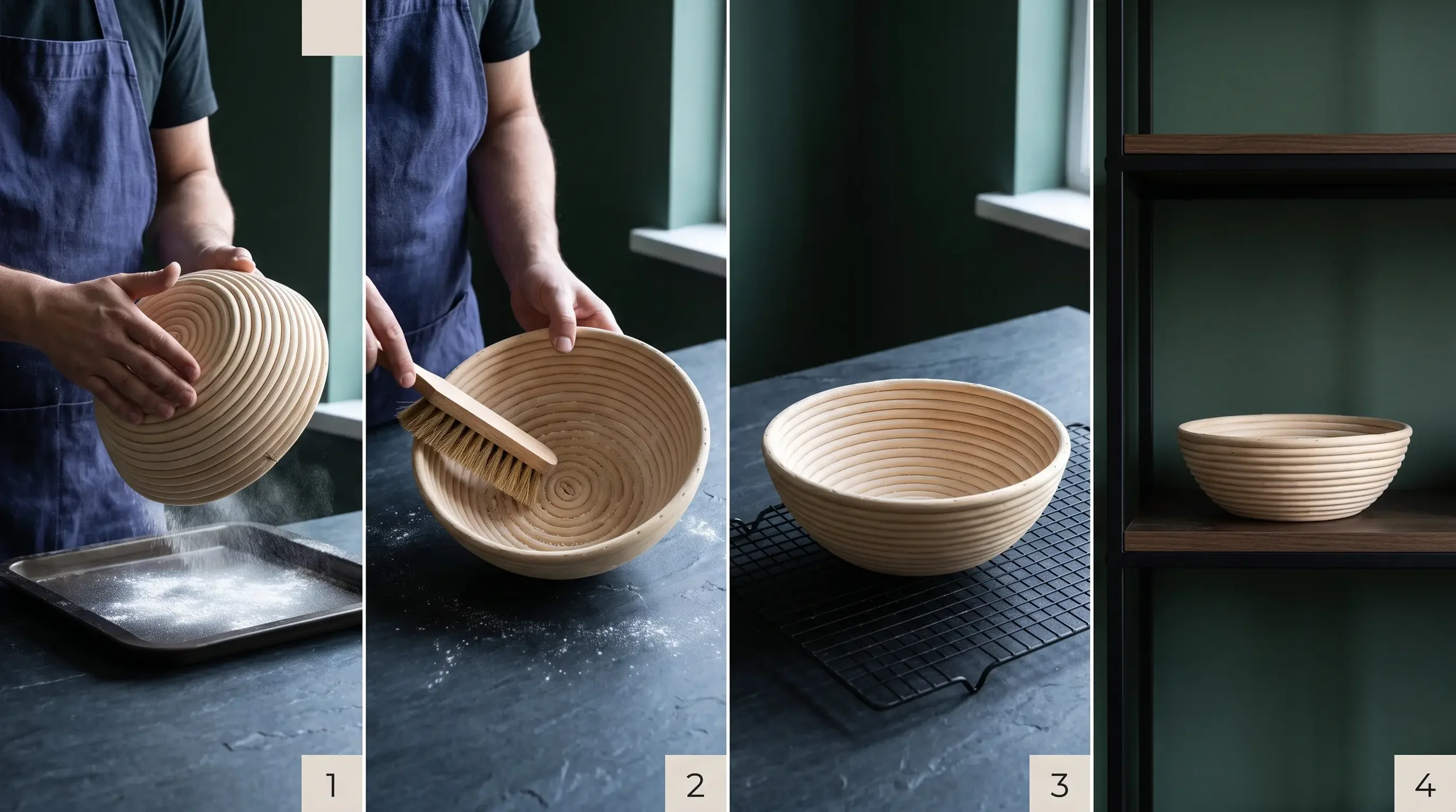
A rattan banneton should not be cleaned like a mixing bowl, dinner plate, or metal pan. If you are wondering how to clean a banneton basket after baking, the best routine is dry, quick, and gentle: tap out loose flour, brush the basket with a stiff dry brush, let stuck dough dry fully, brush again, and air-dry the basket before storage.
This checklist is for everyday banneton care after baking. It covers what to do, what to avoid, how to dry the basket properly, and when a cloth liner makes more sense than scrubbing harder.
Key Takeaways
Clean a rattan banneton dry whenever possible: tap, brush, dry, and store with airflow.
Do not soak, soap, dishwash, or seal a damp basket in plastic.
Let stuck dough dry until brittle before brushing it out.
Wash cloth liners separately, not as part of basket cleaning.
How Do You Clean a Banneton Basket? Quick Checklist
To clean a banneton basket, tap out loose flour, brush the basket while it is dry, let any stuck dough dry completely, brush again, air-dry fully, and store it in a breathable spot. Never use soap, soak the rattan, or put it in a dishwasher.
Use this as your after-bake checklist:
Turn the basket upside down and tap out loose flour.
Brush the inside with a stiff, dry brush.
Check the grooves, seams, and base for dough residue.
If dough is sticky, stop and let it dry fully.
Brush off the dry residue once it becomes brittle.
Leave the basket in a warm, airy place.
Store only when the basket feels dry all over.
The goal is not to make rattan look unused. A light flour layer can be normal. What matters is removing loose flour clumps, wet dough, and trapped residue while keeping the natural weave dry and open.
RattanVibe care note: Handwoven rattan is a natural material, so the easiest care routine is the one that respects the weave: dry brushing for the basket, separate washing for the liner, and enough drying time before storage.
How Should You Clean a Banneton Basket After Every Bake?
After every bake, tap out loose flour, dry-brush the weave and grooves, check for dough residue, and leave the basket exposed to moving air before storing it. Done promptly, this routine should take less time than washing a bowl.
Start by turning the banneton over above the sink, compost bin, or trash. Tap the outer rim gently with your palm. Do not bang the basket against the counter. Handwoven rattan is durable, but its shape lasts longer when you treat it as a natural fiber tool.
Next, use a stiff brush to sweep the inside spiral, sidewalls, and base. Brush with the curve of the basket instead of scraping across the weave. Pay attention to grooves where flour can settle after a high-hydration dough.
Leave the basket out after brushing. Set it upright first, then turn it over later so both sides can dry. Why rush it into a cupboard when a few extra minutes can keep care simple?
What Should You Do If Dough Is Stuck?
If dough is stuck, do not scrub wet dough deeper into the weave. Let it dry completely, brush off the brittle residue, inspect the grooves, and adjust your release routine before the next bake. Dry dough is far easier to remove than smeared dough.
When a sticky patch appears, the best move is often to wait. Set the banneton somewhere airy and let the dough dry until it flakes or crumbles. Once it is dry, use a stiff brush to lift it from the grooves.
Avoid adding water to “loosen” dough during routine cleaning. Wet dough can spread into the weave, especially if you scrub in circles. If a small piece remains, let it dry longer and brush again later.
If sticking happens often, the problem may not be cleaning. It may be flouring, dough hydration, proofing time, or basket-liner fit. A cloth liner can reduce direct contact between sticky dough and rattan, which makes cleanup easier.
Can You Wash, Soak, Soap, or Scrub a Banneton?
Treat rattan as a natural woven fiber, not as a ceramic or metal dish: use dry cleaning for routine care, avoid soap and soaking, and never store the basket damp. The weave can hold moisture longer than a smooth kitchen surface.
Here is the simple “do this, not that” version:
| Do this | Not that |
|---|---|
| Tap out loose flour after baking | Leave flour clumps packed into the grooves |
| Brush the basket while dry | Scrub wet dough deeper into the weave |
| Let stuck dough dry before brushing | Soak the basket to loosen dough |
| Keep the basket out of the dishwasher | Put it in the dishwasher |
| Air-dry completely before storage | Put it away while cool or damp |
| Clean cloth liners separately | Treat the rattan and liner as one washable item |
| Store with airflow | Seal a damp basket in plastic |
Soap is the wrong tool for routine rattan banneton maintenance. It can settle into the weave and leave residue where your dough proofs. Soaking is also a poor habit because water can sit inside the woven material longer than it appears from the surface.
The dishwasher is even harder on a banneton. Heat, water pressure, detergent, and long wet exposure are all mismatched with handwoven rattan. If your instinct says “wash banneton like a dish,” pause and switch to dry care instead.
Think of banneton cleaning this way: remove what blocks airflow, not what proves the basket has been used. A well-cared-for rattan basket may look seasoned with flour, but it should not feel sticky, damp, or packed with residue.
Is Your Banneton Dry Enough to Store?
Your banneton is dry enough to store only when it feels completely dry, has no cool or damp spots, has clear grooves, and has received airflow on both the inside and outside. A warm, airy drying spot is better than a closed cupboard.
Run this storage-readiness check before putting it away:
The basket feels dry across the rim, sides, and base.
There are no cool patches when you touch the weave.
The grooves are clear of sticky dough.
Air has reached both the inside and outside.
The storage area is breathable, not sealed or humid.
A sunny counter, warm shelf, or airy rack can work well. Do not place the basket directly into a sealed bag after brushing. If you need to keep dust off it, wait until the basket is fully dry first.
Incomplete drying can contribute to mold risk; use RattanVibe’s dedicated mold-prevention guide for that specific topic.
When Should You Use or Wash a Cloth Liner?
Clean a cloth liner separately from the rattan basket, wash it when needed, and let it dry completely before reuse. Use a liner when sticking, easier release, or basket protection is the real concern instead of scrubbing the basket harder.
A liner is fabric, so it can be cleaned differently from rattan. Shake out loose flour after use. If the liner is heavily floured, damp, or dough-marked, wash it separately according to the fabric’s care needs, then dry it fully before the next proof.
Do not leave a damp liner sitting inside the basket. That traps moisture against the rattan and slows drying. Keep the two care routines separate: dry-brush the basket, wash the fabric only when needed, and reunite them after both are dry.
If your main issue is sticky dough or easier release, a liner can help reduce direct dough-to-rattan contact. Match the liner to your current basket’s shape and size, such as 6 round, 6 oval, 8 round, 8 oval, 10 round, or 10 oval.
How Should Rattan Banneton Maintenance Work Long Term?
Long-term banneton care is simple: give the basket a deeper dry brushing when buildup increases, confirm the storage area has airflow, inspect the liner for wear, and review your flouring routine if sticking becomes frequent.
Once a month, brush around the rim, base, sidewalls, and tighter grooves. You are not sanding the basket or forcing it back to a new appearance. You are clearing buildup so the natural rattan can stay breathable.
Seasonally, check where the basket lives. Is it stored near steam, a dishwasher, or a damp sink area? Moving it to a drier shelf can make maintenance easier and help a handwoven basket stay useful for years.
Also inspect your liner if you use one. Replace it when it becomes worn, misshapen, or hard to clean. For RattanVibe liners, match the replacement to the basket you already own rather than changing basket size to solve a cleaning problem.
Keep the Basket Dry, Useful, and Ready for the Next Loaf
Routine banneton care is dry and simple: tap, brush, air-dry, and store with airflow. Treat the liner separately and avoid soap, soaking, dishwashers, wet scrubbing, and damp storage. If you remember one rule, keep rattan dry before it goes away.
What is the best way to clean a banneton basket after baking?
The best way is to turn the basket over, tap out loose flour, brush the dry weave with a stiff brush, let stuck dough dry until brittle, brush again, and air-dry fully. This removes residue without forcing water or soap into the rattan.
Do you wash a banneton liner after every use?
You do not need to wash a liner after every use if it is dry and only lightly floured. Shake it out and let it air. Wash the fabric separately when it is damp, dough-marked, or heavily soiled, then dry it completely before putting it back.
Can I clean a proofing basket with soap?
Do not use soap for routine rattan basket care. Soap can settle into the natural weave and may leave residue where dough rests. Dry brushing is the normal cleaning method. Keep soap for washable fabric liners, not the rattan basket itself.
How dry should a banneton be before storage?
A banneton should feel dry all over before storage. Check the rim, base, inside grooves, and outer walls. If any area feels cool, damp, or sticky, leave the basket in a warm airy place longer before putting it away.
A banneton does not need a complicated cleaning routine. It needs the right one: tap out flour, brush dry residue, let stuck dough dry before removing it, and store only when the basket feels fully dry.
That habit protects what makes rattan useful in the first place: lightness, breathability, structure, and a warm handwoven feel. Treat it like a natural material, not a dish, and it can stay part of your baking rhythm for years.
If sticking is what keeps making cleanup harder, solve that specific problem with the right accessory. Explore RattanVibe’s [cloth banneton liner](https://www.rattanvibe.com/shop/p/proofing-basket-liner) options and match the liner to your existing basket’s shape and size.
FAQs
What is the best way to clean a banneton basket after baking?
The best way is to turn the basket over, tap out loose flour, brush the dry weave with a stiff brush, let stuck dough dry until brittle, brush again, and air-dry fully. This removes residue without forcing water or soap into the rattan.
Do you wash a banneton liner after every use?
You do not need to wash a liner after every use if it is dry and only lightly floured. Shake it out and let it air. Wash the fabric separately when it is damp, dough-marked, or heavily soiled, then dry it completely before putting it back.
Can I clean a proofing basket with soap?
Do not use soap for routine rattan basket care. Soap can settle into the natural weave and may leave residue where dough rests. Dry brushing is the normal cleaning method. Keep soap for washable fabric liners, not the rattan basket itself.
How dry should a banneton be before storage?
A banneton should feel dry all over before storage. Check the rim, base, inside grooves, and outer walls. If any area feels cool, damp, or sticky, leave the basket in a warm airy place longer before putting it away.