
Rice Flour for Banneton: The Non-Stick Secret
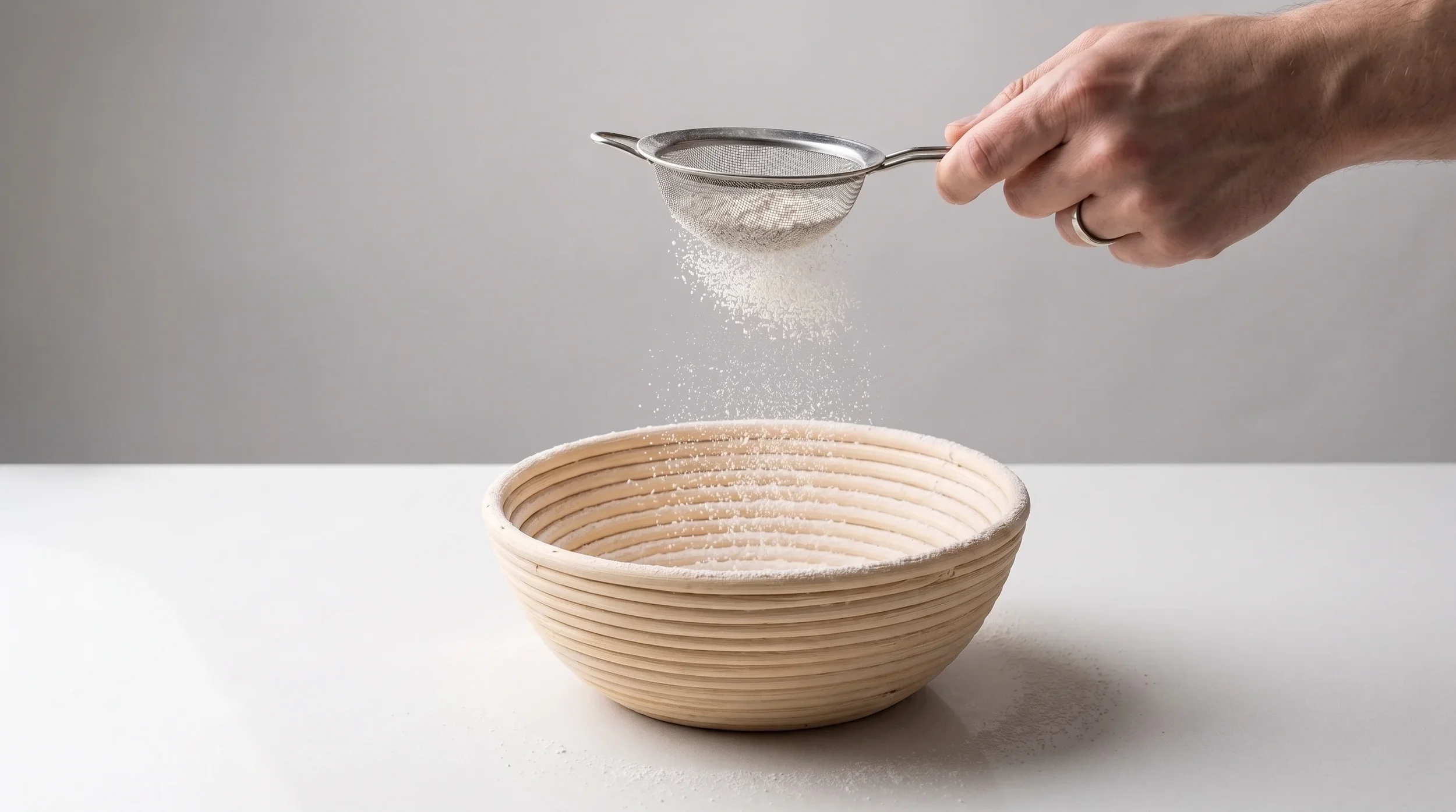
Peeling dough out of a banneton is a bad way to start baking day. The loaf deflates, the surface tears, and the basket feels like the problem. Often, though, the first fix is simpler: change the flour. Rice flour for banneton dusting works where wheat flour often fails because it has no gluten and, in this use, absorbs very little surface moisture. Instead of turning pasty, it creates a dry barrier between the dough and the basket.
Key Takeaways
Finely milled white rice flour is the best default for banneton flour dusting.
Use a thin, visible coating, not loose piles of flour.
Work flour into the base, sidewalls, rim, and coil crevices.
A 50/50 rice flour and all-purpose blend is a useful compromise.
What is the best flour to dust a banneton?
Finely milled white rice flour is the best flour to dust a banneton for most home bakers. It contains no gluten-forming proteins, so it doesn’t behave like wheat flour when it meets moisture from the dough surface. Instead, it tends to stay more separate and powdery, which helps the dough release.
Use it on bare rattan baskets and cloth liners. The basket or liner should be completely dry before dusting. A damp surface hydrates the flour too early and weakens the release layer before the dough even goes in.
If straight rice flour leaves a finish you don’t love, try a 50/50 blend of rice flour and all-purpose flour. You’ll still get some of rice flour’s separation, with a softer wheat-flour pattern on the crust.
Why does rice flour for banneton dusting stop sticking?
Rice flour helps because it does not form gluten and usually stays more distinct at the dough-basket interface. That matters because a banneton is not just holding dough; it is holding a moist, tacky dough surface against rattan coils or fabric for a long proof.
It does not form gluten
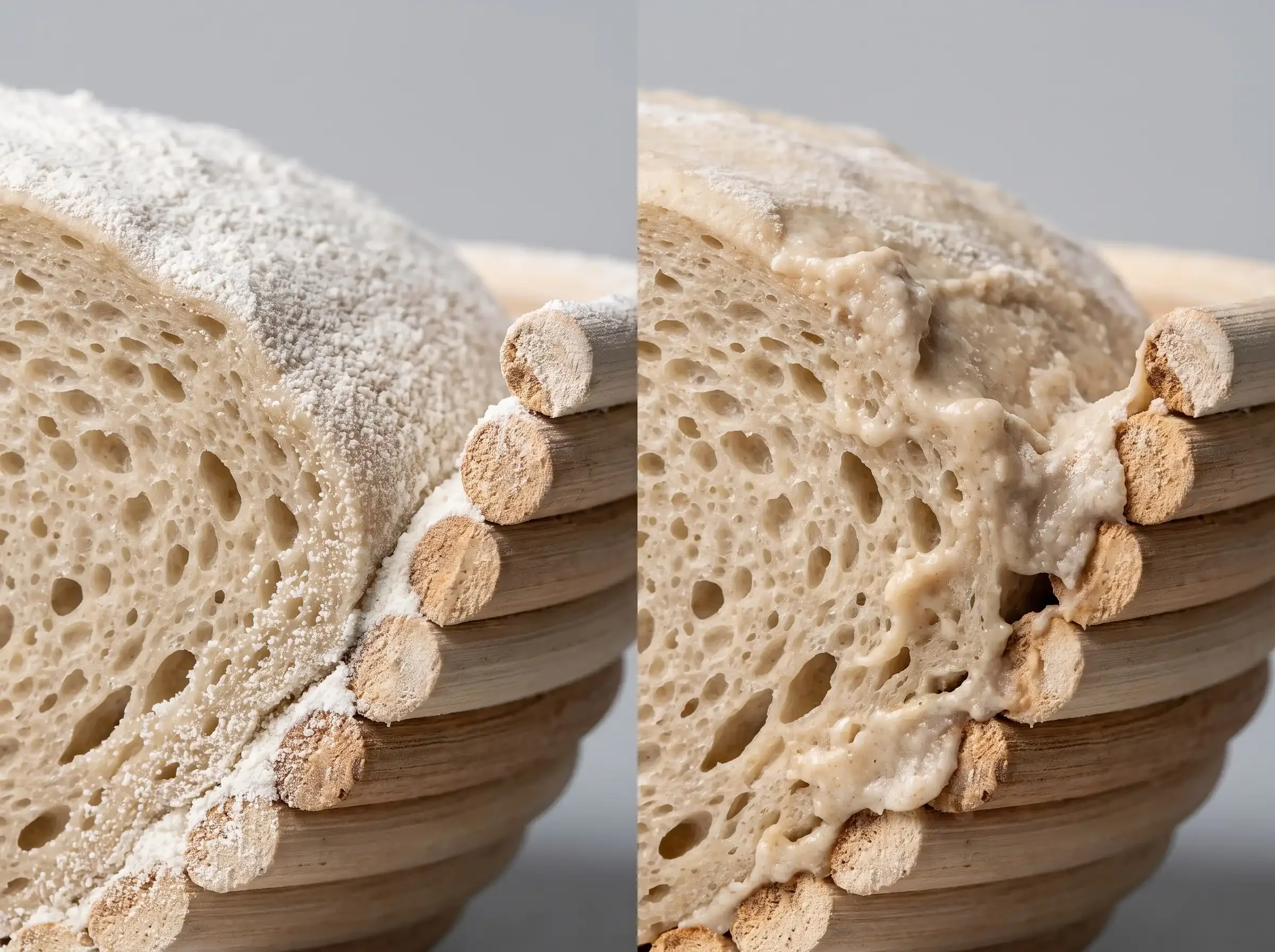
Wheat flour contains gluten-forming proteins. When wheat flour absorbs water from the dough surface, those proteins and starches can form a paste. That paste may cling to the loaf, the liner, or the coil grooves, especially if the dough is wet or proofed for a long time.
Rice flour behaves differently. It has starch, but it does not develop gluten and does not turn into the same stretchy wheat-flour paste. In banneton use, that usually means it acts more like a dry release layer than a gluey coating.
It tends to stay more separate at the interface
Here’s the practical difference: rice flour is not magic, and it does not guarantee release. But under normal proofing conditions, it often remains more powdery where dough meets basket. That powdery layer gives the dough less bare rattan or fabric to grip.
Think of it as coverage, not armor. The goal is to place a continuous dry barrier between every dough-contact surface and the loaf. Miss the sidewall or a coil groove, and the dough can still find that exposed spot.
RattanVibe note: In our banneton setup guidance, we treat rice flour as a release layer, not a cure-all. Bare handwoven rattan needs attention in the grooves. A linen liner needs a lighter, even fabric coating. In both cases, dry contact surfaces matter more than a heavy pile of flour.
Why more wheat flour can still fail?
The common myth is that sticking means you didn’t use enough wheat flour. Sometimes that’s true, but often it isn’t. A thicker layer of wheat flour can hydrate, clump, and create gummy patches.
If your dough keeps sticking, don’t keep piling on bread flour. Switch to white rice flour, or start with a rice-and-wheat blend. That single change often gives clearer feedback than adding more of the same flour that already failed.
Which flour should you use in a proofing basket?
The best flour for a proofing basket depends on the dough, the basket surface, and the crust finish you want. Still, if your priority is release, white rice flour is the easiest starting point. Use alternatives only when you understand the tradeoff.
| Flour | Release performance | Best use | Notes |
|---|---|---|---|
| Finely milled white rice flour | Most reliable default | Bare rattan or fabric liner | Neutral color and flavor; spreads evenly when finely milled |
| Brown rice flour | Usually effective | When white rice flour is unavailable | May be coarser and can leave a darker, speckled finish |
| Glutinous rice flour | Not the preferred default | Only after testing with your dough | Contains no gluten, despite the name, but can become tackier when hydrated |
| 50/50 rice flour and all-purpose flour | Good compromise | Routine loaves with moderate hydration | Softer crust pattern while keeping some rice-flour separation |
| All-purpose or bread flour | More likely to gum up | Lower-risk dough or backup use | Works sometimes, but absorbs surface moisture more readily |
| Rye flour | Less dependable than rice flour | Flavor or appearance preference | Rye can absorb water readily and become sticky, so test first |
If you’re wondering what flour for proofing basket use is safest, start simple. Buy finely milled white rice flour, keep it dry, and apply it evenly. Once your release is consistent, you can experiment with blends for appearance.
How much rice flour should you put in a banneton?
Use enough rice flour to create a thin, visible, continuous coating. Don’t measure success by tablespoons. Basket size, dough hydration, liner texture, and rattan condition all change how much flour you need.
The right amount looks like a light veil over the basket. You should not see bare patches on the base, sidewalls, rim, or coil edges. At the same time, you should not see drifts of loose flour sitting in the bottom.
| Amount | What it looks like | What happens |
|---|---|---|
| Too little | Bare rattan, cloth, or groove edges remain visible | Dough can grip unprotected areas |
| Just right | A light, even veil covers the base, sides, grooves, and rim | Creates a continuous release barrier without heavy residue |
| Too much | Loose piles or clumps collect at the base | Wastes flour and may leave thick patches on the loaf |
A simple rule works well: coat first, then tap out loose excess. If flour falls out in piles, you added more than the basket can hold.
How do you use rice flour for banneton dusting?
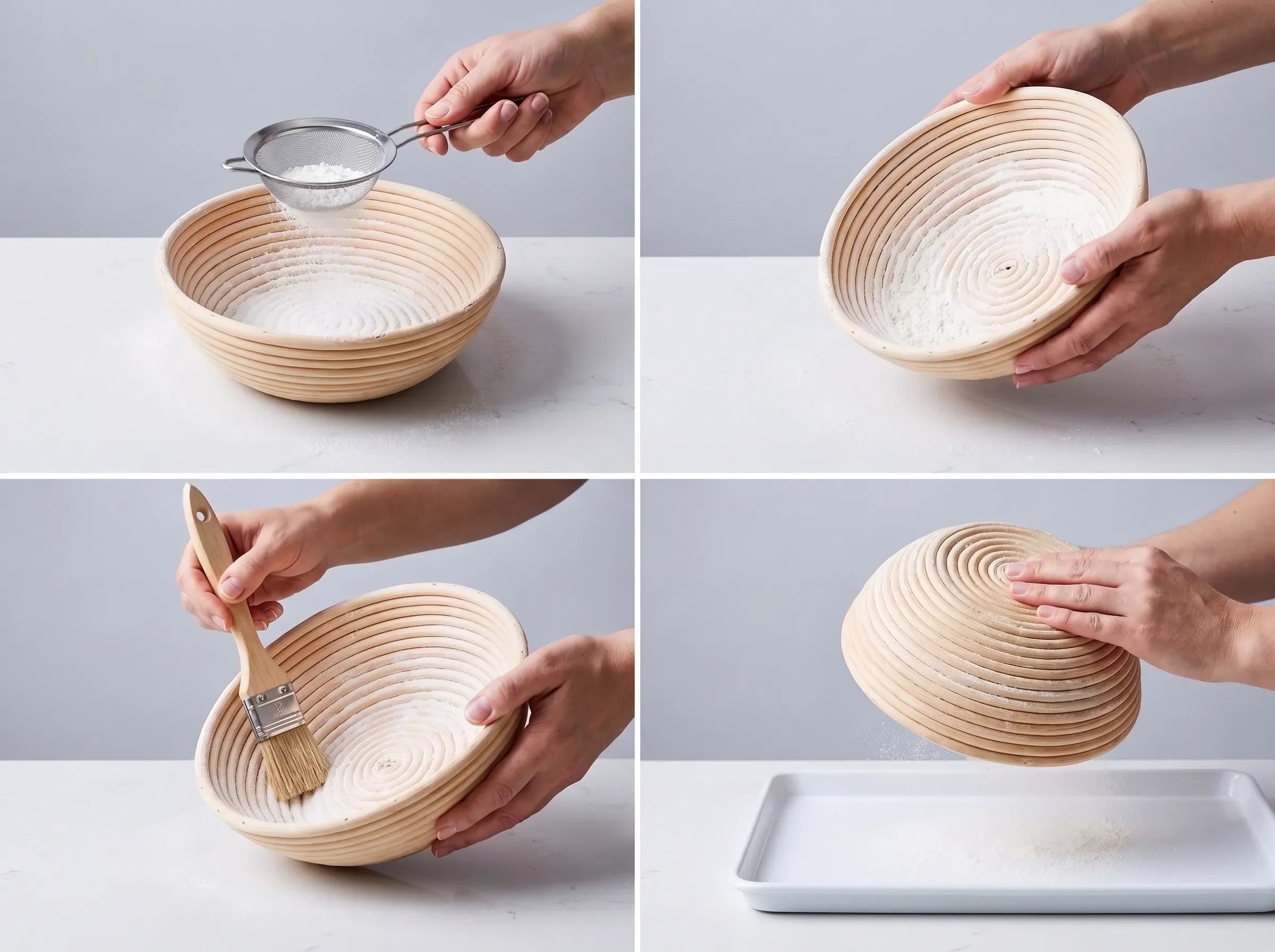
Rice flour for banneton dusting works best when you apply it to every dough-contact area, not just the bottom. The most common miss is the coil crevice. That exposed groove can grab the dough even when the base looks well floured.
Start with a completely dry basket or liner. Moisture can hydrate the flour early and weaken the barrier.
Sprinkle or sieve rice flour across the base. A small sieve gives a more even coat and fewer clumps.
Rotate and tilt the basket. Let flour travel up the sidewalls and toward the rim.
Work flour into the coil crevices. Use clean fingertips or a dry pastry brush. Pay attention to the groove where each rattan coil meets the next.
Tap out loose excess. Turn the basket over and tap gently. Keep the thin coating; remove only loose piles.
Inspect under good light. Touch up any bare spots before the dough goes in.
Refresh before every proof. A seasoned basket still needs fresh release flour.
A bare rattan banneton needs careful groove coverage. A cloth liner needs even coverage across the fabric, especially if the dough is wet or the proof is long. The technique changes slightly, but the principle is the same: dry surface, even coating, no bare contact points.
If your basket is brand new, complete its first-use preparation before judging your dusting flour. If dough still sticks after careful rice-flour coverage, the cause may sit outside flour choice, such as dough hydration, proofing, shaping tension, or surface moisture.
Rice flour dusting checklist: avoid these four mistakes
Use this quick checklist before loading dough into your banneton. It’s especially helpful when you’re baking under time pressure and don’t want to discover a bare patch after proofing.
Dusting only the base: Coat the sidewalls, rim, and every dough-contact groove.
Flouring a damp basket or liner: Let the surface dry fully before adding rice flour.
Adding more wheat flour after sticking: Test white rice flour or a 50/50 blend first.
Assuming all sticking is a flour problem: If dusting is correct, look beyond flour choice.
If you want a replaceable surface between dough and basket, explore a RattanVibe [proofing basket liner](https://www.rattanvibe.com/shop/p/proofing-basket-liner). Choose the liner size that matches your existing basket shape and size: 6, 8, or 10 inch round or oval.
FAQs:
Can I use all-purpose flour instead of rice flour in a banneton?
Yes, all-purpose flour can work. It is more likely to hydrate and become gummy, though. A 50/50 rice flour and all-purpose blend is a better transition option.
Should I use white rice flour, brown rice flour, or glutinous rice flour?
Finely milled white rice flour is the simplest default. Brown rice flour can work but may be coarser. Glutinous rice flour contains no gluten, but it can become tackier when hydrated.
Do I need rice flour if I use a cloth banneton liner?
Yes, a light dusting is still useful. Make sure the liner is dry first. Wet or long-proofed dough needs especially careful, even coverage.
Do I need to re-dust my banneton before every loaf?
Yes. Inspect and refresh the coating before every proof. Add only enough flour to restore a complete, thin layer without leaving old flour piled in the basket.