
Banneton Size Guide: Dough Weight Chart for Bakers
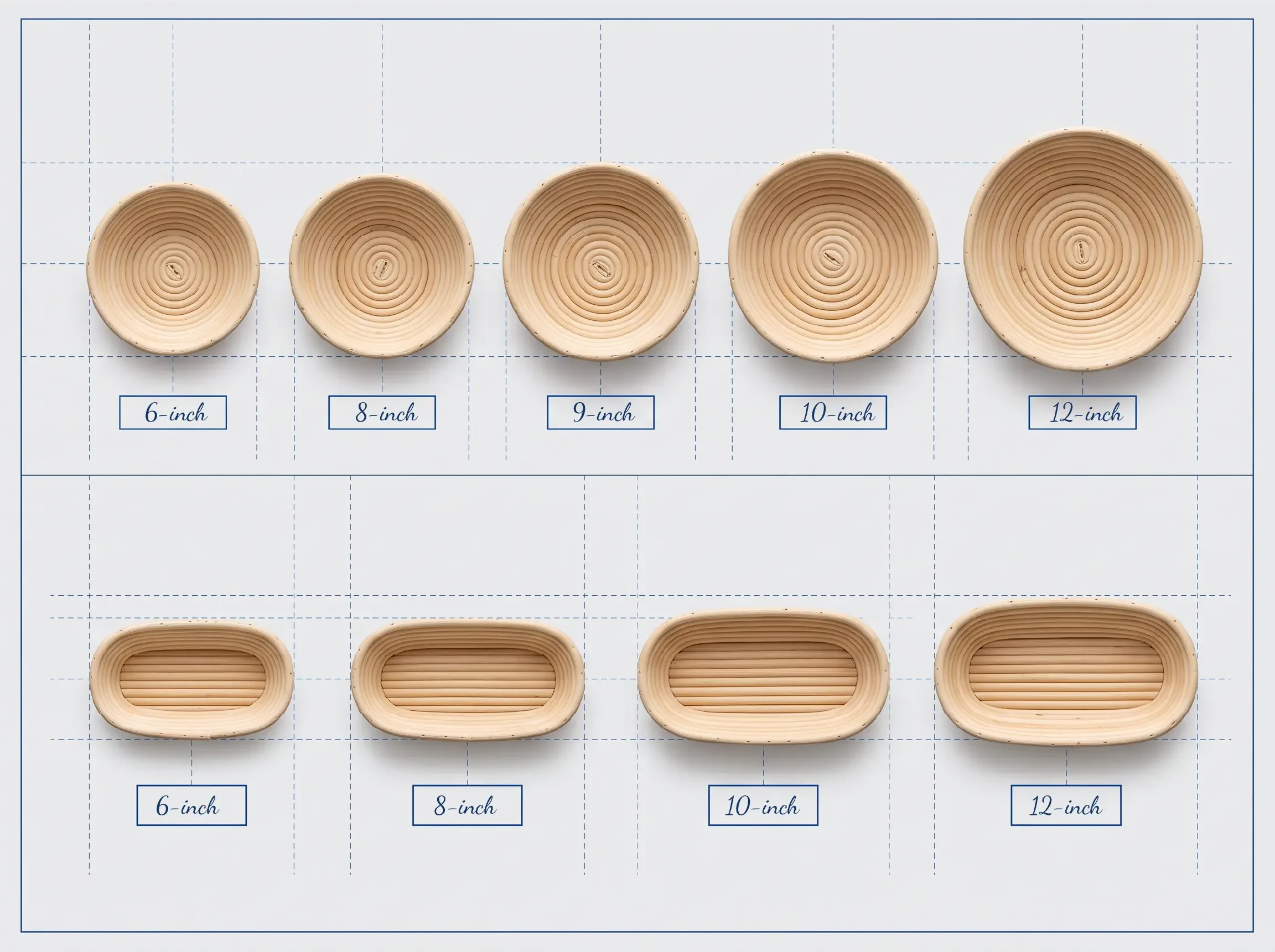
Banneton Size Guide: Match Dough Weight to Basket Size
Choose a banneton by your recipe’s total dough weight, then choose the shape that matches the loaf you want to bake. Total dough weight means flour, water, starter, salt, and any mix-ins combined. It is not the same as flour weight.
The easiest rule is simple: find the basket range that contains the weight of one shaped loaf. If your dough falls between published ranges, don’t force the match. Adjust the recipe slightly, choose based on your preferred loaf profile, or confirm the basket’s usable volume before buying.
Key Takeaways
Use total dough weight, not flour weight, for banneton sizing.
A 500g batard fits an 8-inch oval range; a 500g boule falls between published 6-inch and 8-inch round ranges.
For many 450–600g-flour boule recipes that finish around 800–1000g total dough, the 9-inch round is a strong size to review.
A basket that is too large can create flat spread; one that is too small can cause mushroom overflow.
Proofing Basket Size Chart for Banneton Sizing
RattanVibe’s first-party size chart uses total dough-weight ranges from 200g to 1700g across round and oval baskets. Use the range first, then check loaf shape and baking-vessel fit. The chart below is based on RattanVibe’s published banneton sizing guidance: [RattanVibe published size chart](https://www.rattanvibe.com/shop/p/banneton-2x).
Screenshot this proofing basket size chart before you buy. Servings and vessel notes are practical estimates, not strict rules, because proofed loaf shape and baker dimensions can vary.
| Shape | Basket size | Recommended total dough weight | Best for | Approx. servings | Typical vessel check |
|---|---|---|---|---|---|
| Round | 6-inch | 220–400g | Mini loaves and practice bakes | 1–2 | Check 3–4 qt bakers |
| Round | 8-inch | 600–850g | Standard home loaves | 2–4 | Check 5–6 qt bakers |
| Round | 9-inch | 800–1000g | Larger standard boules | 3–5 | Check 6 qt+ bakers |
| Round | 10-inch | 900–1250g | Family-size boules | 4–6 | Check 6–7 qt+ bakers |
| Round | 12-inch | 1400–1700g | Large batches and sharing | 6–10 | Check 7 qt+ bakers or baking stone |
| Oval | 6-inch | 200–350g | Small batards | 1–2 | Check 3–4 qt bakers |
| Oval | 8-inch | 500–700g | Standard batards | 2–4 | Check 5–6 qt bakers |
| Oval | 10-inch | 800–1000g | Long family loaves | 4–6 | Check 6 qt+ bakers |
| Oval | 12-inch | 1200–1500g | Large batards and entertaining | 6–8 | Check 7 qt+ bakers or baking stone |
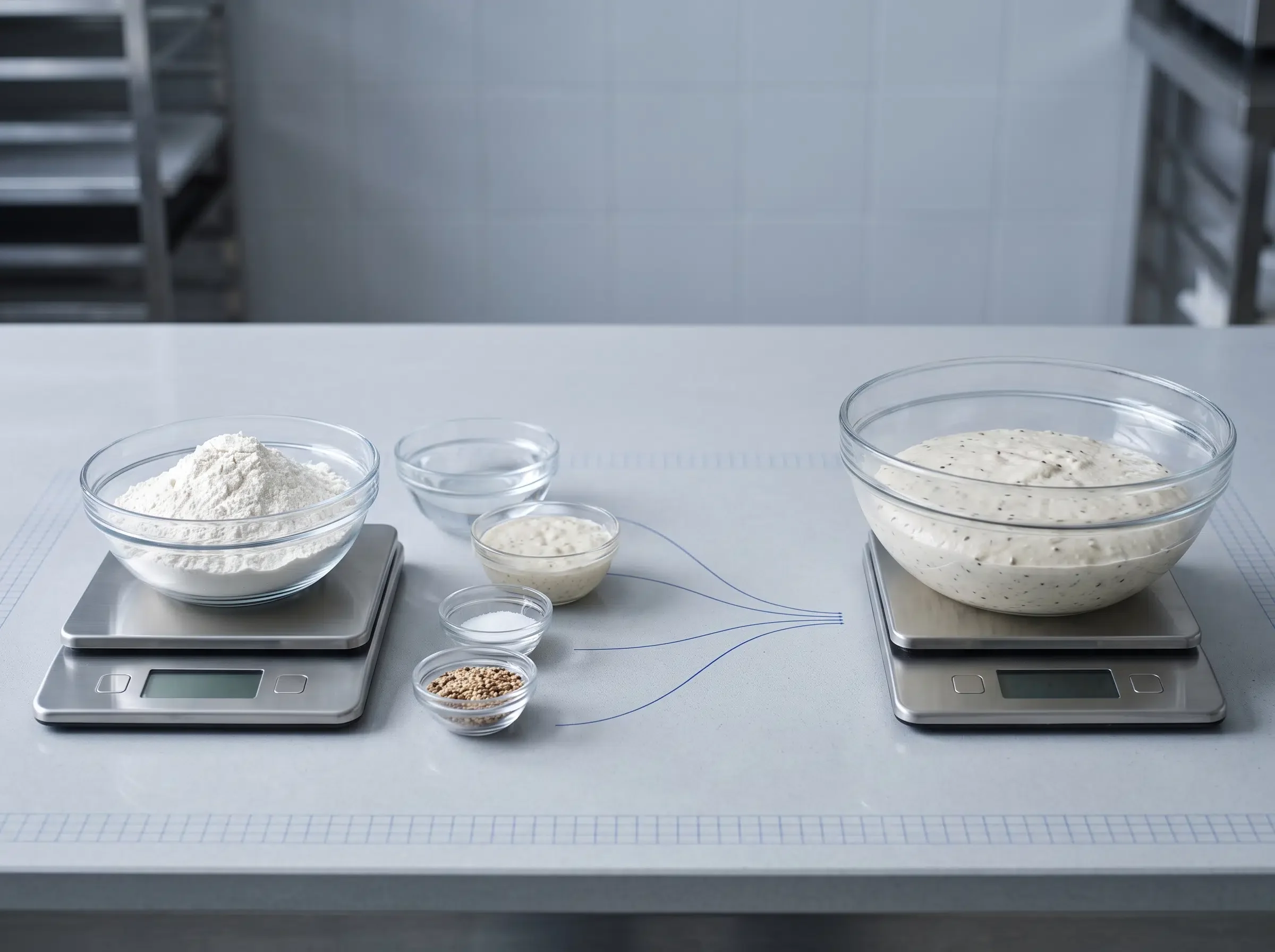
Sizing warning: Dough weight means the total weight of flour, water, starter, salt, and mix-ins. A recipe with 500g flour will weigh much more than 500g after hydration and starter are added.
Here’s the buying logic behind the table. A 750g round dough sits inside the 8-inch round range, so that is a straightforward match. A 1kg oval dough sits at the top of the 10-inch oval range. A 500g round dough, however, sits between the 6-inch and 8-inch round ranges, so the chart should not pretend there is a perfect published match.
A size chart is most useful when it prevents overconfidence. When your dough lands inside a range, you have a clear direction. When it lands in a gap, pause and decide whether to scale the recipe, confirm usable basket volume, or choose a slightly tighter or roomier proof on purpose.
How Do You Calculate Dough Weight for Banneton Sizing?
Use the weight of one shaped loaf. A recipe with 500g flour can easily become 850g to 950g of dough once water, starter, salt, and additions are included, so flour weight alone can point you toward the wrong basket.
Total dough weight versus flour weight
Total dough weight is everything that goes into the dough. That includes flour, water, sourdough starter, salt, seeds, olives, nuts, cheese, or any other mix-ins. If your recipe makes two loaves, divide the final dough weight by two before checking the chart.
This is the most common sizing mistake. Someone may ask, “What size banneton for 500g dough?” while another baker asks about “500g flour.” Those are not the same question. A 500g dough is a small loaf. A dough made with 500g flour is usually much larger.
Simple sizing method
Use this four-step method before you buy:
1. Add the gram weight of every ingredient.
2. Confirm whether the batch is divided into more than one loaf.
3. Use the weight of one shaped loaf in the chart.
4. Match the loaf shape, then check Dutch oven, covered baker, stone, or tray fit.
Already mixed the dough? Weigh the shaped piece before it goes into the basket. That one number is more useful than the flour amount in the recipe title.
What Round Banneton Size Fits a Boule?
For round loaves, match one shaped boule to the published round-basket range: 220–400g for 6-inch, 600–850g for 8-inch, 800–1000g for 9-inch, 900–1250g for 10-inch, and 1400–1700g for 12-inch.
Use these examples to make the round banneton size guide practical:
| Total dough weight for one boule | Round banneton guidance |
|---|---|
| 300g | Use the 6-inch round range for a mini boule. |
| 500g | This falls between the published 6-inch and 8-inch round ranges. Do not treat it as an exact chart match. |
| 750g | Use the 8-inch round range for a standard boule. |
| 800–1000g | Review the 9-inch round range. From 900g upward, the dough also overlaps the 10-inch round range, so choose by desired profile and vessel fit. |
| 1000g | The 10-inch round is the roomier published match; 1000g is also the upper edge of the 9-inch range. |
| 1500g | Use the 12-inch round range for a large boule or shared loaf. |
The 9-inch round banneton is best understood as RattanVibe’s bridge size between an 8-inch standard boule and larger round baskets. It is listed for 800–1000g total dough or 450–600g flour, which suits many fuller everyday boule recipes. It is not the right choice for mini loaves, 500g total-dough boules, or long oval batards.
What Oval Banneton Size Fits a Batard?
For oval loaves, use 6-inch for 200–350g, 8-inch for 500–700g, 10-inch for 800–1000g, and 12-inch for 1200–1500g of total dough. Oval sizing is about both weight and length.
Use these examples when shaping batards:
| Total dough weight for one batard | Oval banneton guidance |
|---|---|
| 300g | Use the 6-inch oval range for a small batard. |
| 500–700g | Use the 8-inch oval range for a standard batard. |
| 750g | This falls between the published 8-inch and 10-inch oval ranges. Avoid guessing an exact fit. |
| 800–1000g | Use the 10-inch oval range for a long family loaf. |
| 1200–1500g | Use the 12-inch oval range for a large batard. |
The main edge case is 750g oval dough. Bake that size often? Adjust the dough into a listed range or confirm the basket’s usable volume before choosing. What matters most is how the shaped dough sits after final shaping, not just the advertised length.
What Happens If a Banneton Is Too Big or Too Small?
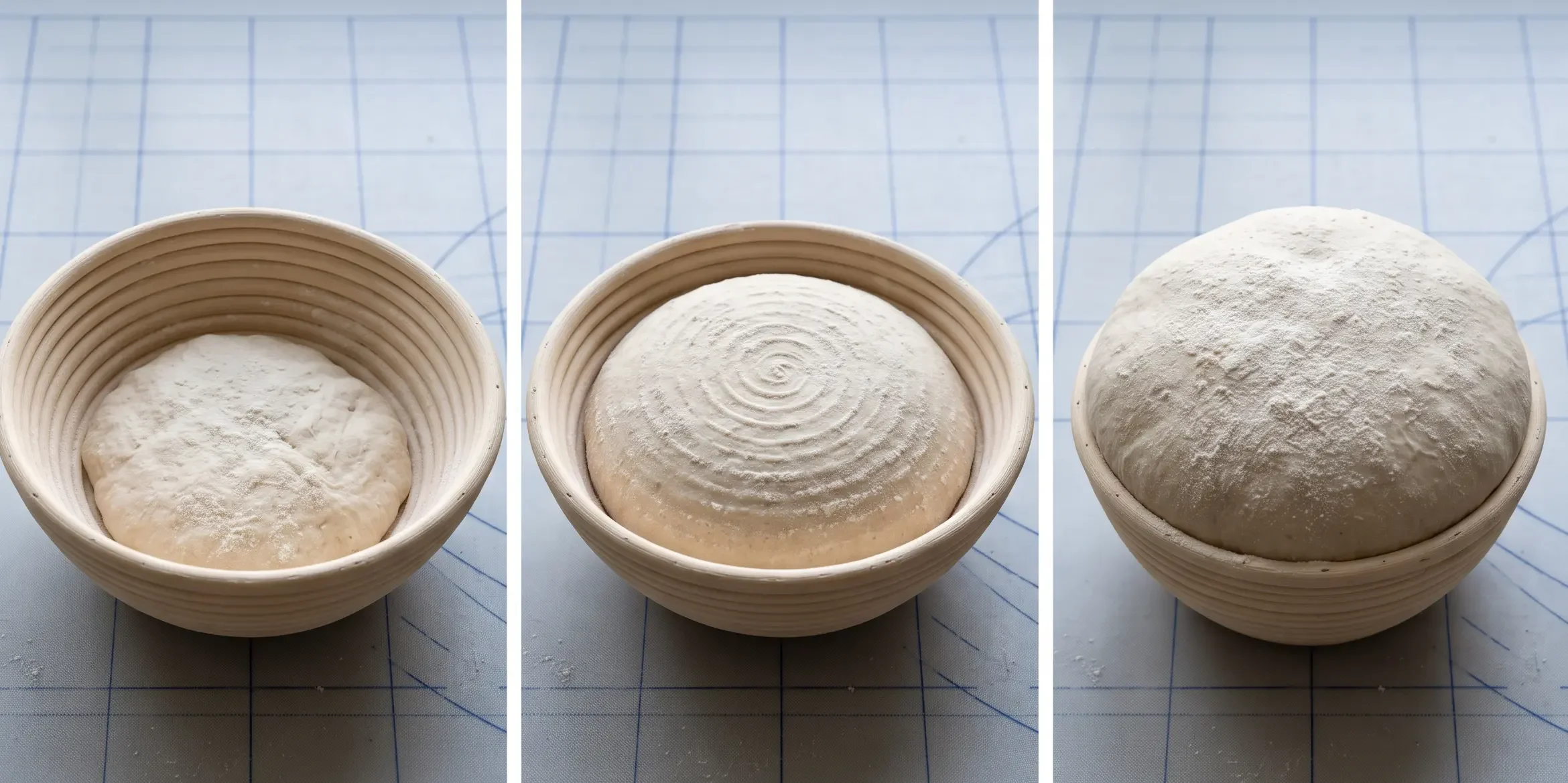
A basket that is too big gives dough extra sideways room and can produce a wider, flatter loaf. A basket that is too small can push dough above the rim, creating a mushroomed shape and making release messier.
Signs the basket is too big
Your basket may be too large if the proofed dough stays low, spreads laterally, or bakes wider than intended. The dough may still be edible and tasty, but the shape can feel disappointing, especially when you wanted a taller boule.
Think of the banneton as support during the final proof. It does not create structure on its own, but it helps hold the shape you built during preshaping and final shaping. Too much empty room reduces that support.
Signs the basket is too small
Your basket may be too small if the dough reaches the rim too early, bulges over the top, or catches around the edge when you turn it out. This is the classic mushroom-overflow problem.
A tight basket can look dramatic, but it is not always helpful. If the dough expands above the rim before proofing is complete, the loaf can deform before it ever reaches the oven.
| Fit | What you see | Likely result |
|---|---|---|
| Too big | Dough sits low and spreads | Wider, flatter loaf |
| Correct fit | Dough rises with side support | Cleaner shape and easier handling |
| Too small | Dough domes over the rim | Mushroom shape and messy release |
Does Loaf Shape or Dutch Oven Size Change Your Choice?
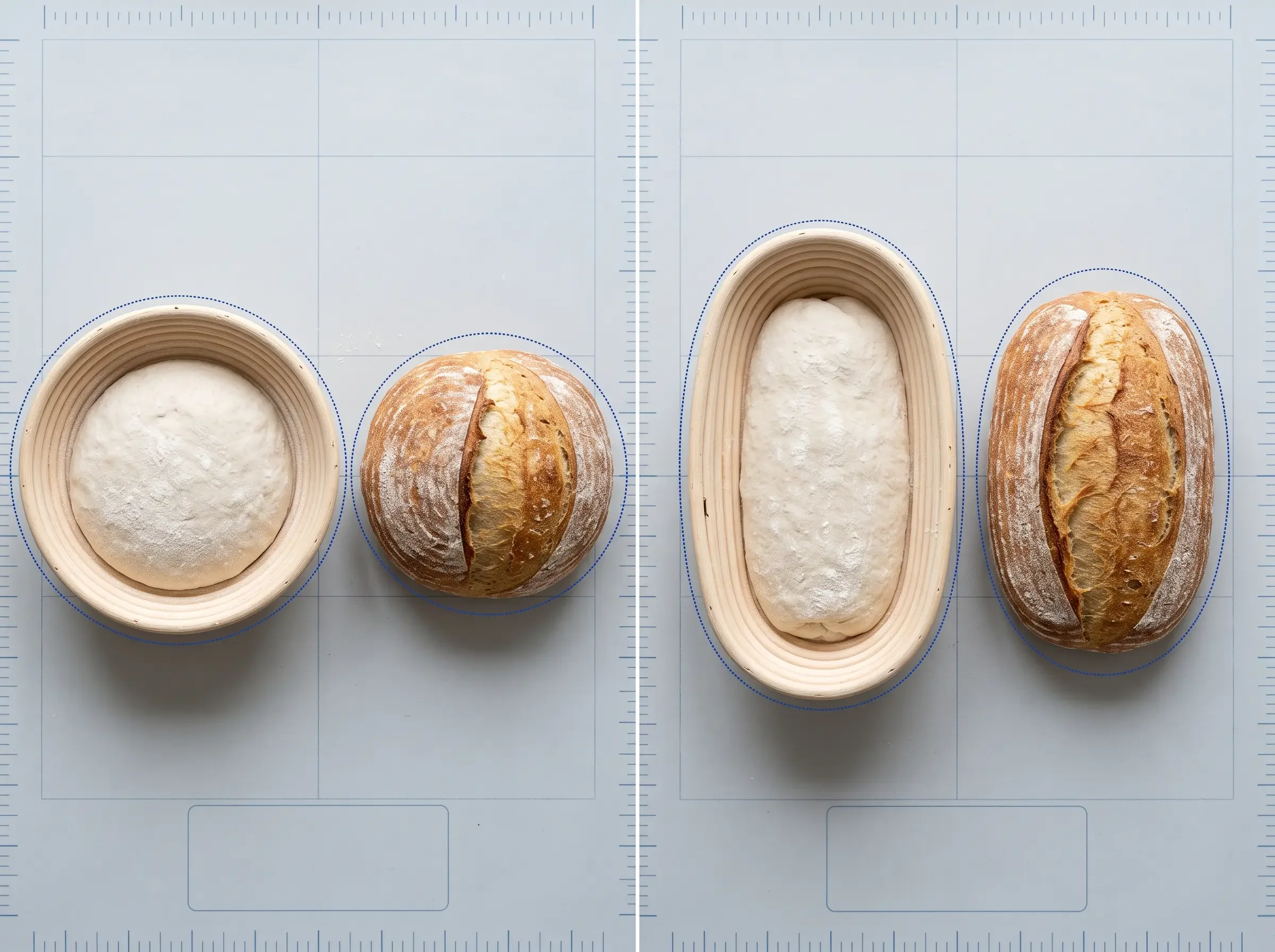
Yes. Choose round for a boule and oval for a batard, then confirm that the proofed loaf and basket size suit your Dutch oven, covered baker, baking stone, or tray. Because rattan baskets are handwoven, small measurement variation is normal.
Keep the shape decision short: round baskets support round boules, while oval baskets support longer batards. This guide is focused on matching dough weight to basket size, so use shape only after you know the dough-weight range you need.
The vessel check matters because a basket can fit your dough but still point you toward a loaf that is awkward for your baking setup. A narrow Dutch oven may not suit a long oval loaf. A wider covered baker may make a round loaf easier to handle.
Final Banneton Size Guide Check Before You Buy
Before buying, confirm four details: one loaf’s total dough weight, intended loaf shape, matching published chart range, and baking-vessel fit. If all four line up, you can choose with much less guesswork.
Fill this in before you add a basket to your cart:
My total dough weight for one loaf is: ____ g
My loaf shape is: round / oval
My matching chart range is: ____ g
My basket size is: ____ inch
My Dutch oven or baking surface fits: yes / no
For an 800–1000g round boule, especially many 450–600g-flour recipes that finish as a fuller everyday loaf, the [9 inch banneton](https://www.rattanvibe.com/shop/p/9inch-round-banneton) is the matching RattanVibe size to review. It is a natural rattan basket with a cloth liner, made for larger standard round loaves rather than mini loaves or long oval loaves.
If your chart result points to another size, follow the chart rather than forcing the 9-inch option. Use the published size chart to confirm the matching round or oval range before buying.
FAQs
What size banneton should I use for 500g of dough?
For 500g total dough, an 8-inch oval is within the published 500–700g oval range. For a round boule, 500g falls between the 6-inch round range of 220–400g and the 8-inch round range of 600–850g, so it is not an exact chart match.
What size banneton should I use for 750g of dough?
For a 750g boule, use the 8-inch round range because it covers 600–850g. For an oval loaf, 750g falls between the 8-inch oval range of 500–700g and the 10-inch oval range of 800–1000g, so check volume or adjust dough weight.
What size banneton should I use for a 1kg loaf?
For a 1kg boule, the 10-inch round is the roomier published match because its range is 900–1250g. The 9-inch round lists 800–1000g, so 1kg is at its upper edge. For a batard, 1kg is the top of the 10-inch oval range.
Is banneton size based on flour weight or dough weight?
Use total dough weight unless a product page explicitly gives a flour-weight range. A dough made with 500g flour often weighs far more than 500g after water, starter, salt, and mix-ins. For accurate sizing, weigh one shaped loaf before proofing.
Can one banneton fit several dough weights?
Yes, as long as those weights stay inside the basket’s published range. For example, an 8-inch round covers 600–850g, so several standard boule recipes can fit. Problems start when the dough falls below the range, above the range, or between two published ranges.
Choose the basket that matches the dough you actually bake. The right banneton size starts with one number: the total dough weight of one shaped loaf. From there, choose round for boules or oval for batards, then check the published range and your baking vessel.
Use the chart first. If your dough lands cleanly inside a range, the choice is straightforward. If it lands in a gap, pause before buying. A small adjustment to dough weight is often better than living with flat spread or mushroom overflow.