
Round vs Oval Banneton: A 4-Part Decision Framework
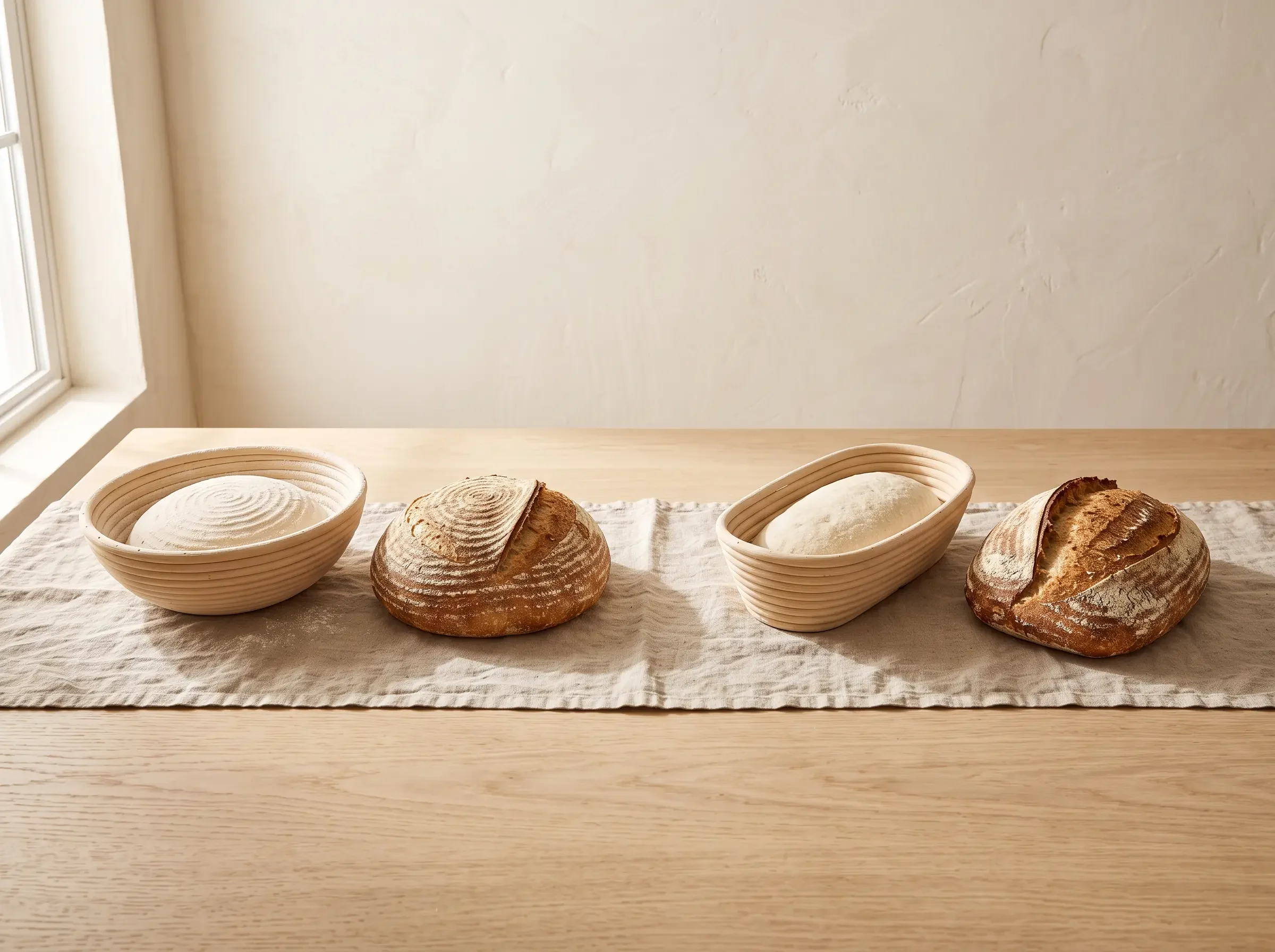
Choosing between a round vs oval banneton is mostly a shape decision, not a skill test. A round basket shapes a boule. An oval basket shapes a batard. That one difference affects how the loaf looks, how it slices, and how easily it fits your baking vessel.
If you’re buying your first proofing basket, start with round unless you already know you want long sandwich-style slices. If you bake every week and use both loaf styles, a round-and-oval set can make sense because each basket earns its place.
Key Takeaways
Choose a round banneton for boules, beginners, and round Dutch ovens.
Choose an oval proofing basket for batards, sandwiches, toast, and more even slices.
Buy a set only if you bake often enough to use both loaf shapes.
Treat size and material as separate decisions after you choose the shape.
> Editor’s note: This guide keeps the decision focused on shape. Use it to choose round, oval, or both first. Then check RattanVibe’s size guide for dough capacity and material comparison for rattan, liner, and care questions.
Which Banneton Shape Should You Buy First?
Choose round for boules, beginners, or a round Dutch oven. Choose oval for batards, sandwich-friendly slices, or an oval or open-bake setup. Choose a set when both loaf styles are part of your real weekly routine, not just because it feels complete.
Here’s the same framework in a quick table:
| Question | If your answer is yes | Best shape |
|---|---|---|
| Do you want a classic boule? | Yes | Round |
| Do you want batard slices for sandwiches? | Yes | Oval |
| Do you only use a round Dutch oven? | Yes | Round |
| Do you bake both styles weekly? | Yes | Set |
This keeps the decision practical. You’re not trying to find the “better” banneton. You’re matching the basket to the bread you actually want to bake, slice, and serve.
Question 1: Do You Want a Boule or a Batard?
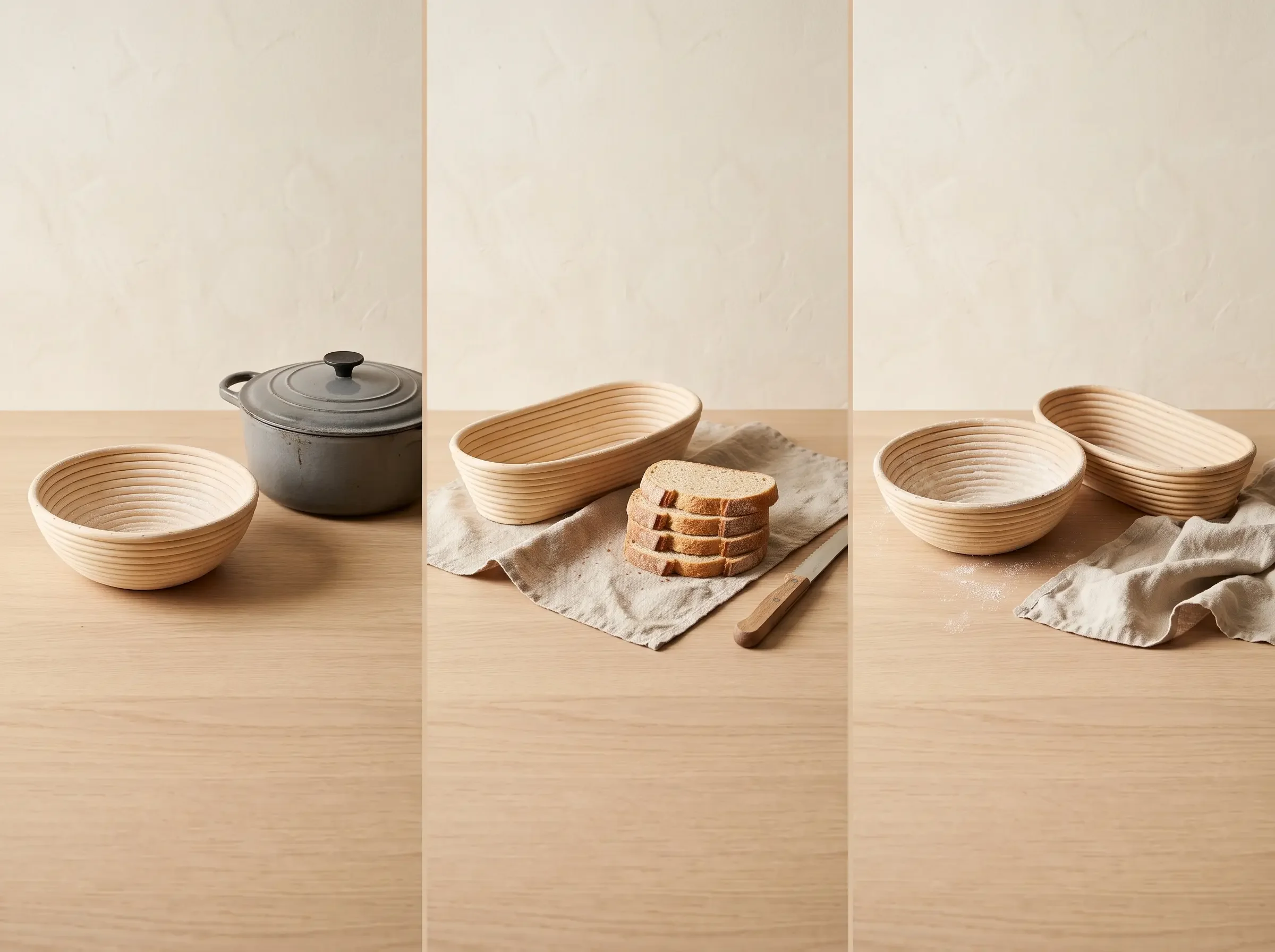
Choose a round banneton for a boule or circular loaf. Choose an oval banneton for a batard or elongated oblong loaf. This is the main difference in the boule vs batard basket decision, and it should come before size, accessories, or styling preferences.
Choose a Round Banneton for a Boule
A round banneton supports dough in a circular shape while it proofs. The final loaf is a boule: classic, rustic, and easy to recognize. If you picture sourdough as a round loaf with a single score across the top, this is probably the shape you want.
Round is also the calmer first choice for many beginners. Shaping a boule is easier to repeat because the dough is gathered evenly toward the center. Does that mean round loaves always bake better? No. It means the path from shaping to proofing to baking is usually simpler.
RattanVibe’s round natural rattan banneton is designed for everyday boule baking, with a cloth liner included. It’s a sensible first basket when you want a natural rattan feel and don’t want the shape decision to become complicated.
Choose an Oval Banneton for a Batard
An oval proofing basket supports a longer loaf. The final bread is a batard: still rustic, but more elongated than a boule. Choose oval when you deliberately want that shape, not because it sounds more advanced.
A batard can feel more practical on busy mornings. The loaf is easier to slice into pieces that look similar, which helps when you’re making toast, sandwiches, or packed lunches. If that’s how your bread will be used, oval may be the better first basket for your kitchen.
> Baker note: Shape choice doesn’t rank your baking. A boule and a batard can both be beautiful, open, flavorful loaves. The better basket is the one that supports the loaf you’ll actually make again.
Question 2: How Does Round vs Oval Banneton Shape Affect Slicing?
Round boules create a classic, shareable table loaf, while oval batards generally produce more uniform slices that are easier to use for sandwiches and toasters. If your bread mostly becomes toast, the oval basket deserves serious consideration.
A boule changes as you slice through it. The first slices may be small, the middle slices can be very wide, and the last pieces narrow again. That’s charming for dinner bread, dipping, cheese boards, and tearing at the table. It’s less convenient when every slice needs to fit a toaster slot.
A batard tends to give you a longer run of similarly sized slices. That helps with sandwiches, breakfast toast, and freezing individual portions. It also makes the loaf feel easier to use during the week. Who wants a beautiful loaf that’s awkward every time you pack lunch?
Crust and crumb feel different too, though shape isn’t the only factor. A boule often gives a dramatic round table-loaf presence with a broad center crumb. A batard spreads the loaf lengthwise, so each slice can feel more balanced for topping, spreading, and stacking.
Choose round if you value presentation and sharing. Choose oval if your bread has a job: toast, sandwiches, lunchboxes, or repeatable slices.
Question 3: What Baking Vessel Do You Actually Use?
A round banneton is the safer match for a round Dutch oven. An oval basket works best with an oval Dutch oven, combo cooker, baking stone, steel, or open-bake setup that can accommodate the longer loaf.
This is where many buyers make the wrong first choice. They fall in love with the batard shape, buy an oval basket, then realize their only covered baking vessel is a small round pot. The dough may fit badly, lose its shape during transfer, or sit too close to the sides.
If you own a round Dutch oven, a round banneton keeps the workflow direct: round dough, round basket, round pot. That doesn’t guarantee results, but it removes one common point of friction.
If you own an oval Dutch oven or bake on a stone or steel, an oval proofing basket becomes much easier to use. The longer loaf has room to land, expand, and release steam without being forced into a vessel that fights its shape.
Before you buy, do a quick fit check. Look at the inside length and width of your baking vessel, not just the label on the box. Your proofed dough needs comfortable space, especially after scoring. If the vessel is round and tight, buy round first.
Question 4: How Often Do You Bake?
One round basket is the simplest starting point for a beginner or occasional baker. Add an oval basket when batards serve a clear purpose. Choose a set when you bake weekly and genuinely use both shapes.
Think in buyer profiles:
- First-time sourdough baker: Buy one round banneton. It gives you a classic boule and works naturally with many home Dutch ovens.
- Sandwich-focused baker: Buy an oval proofing basket. You’re choosing the shape because the finished slices match how you eat bread.
- Weekly baker: Buy a round-and-oval set if you alternate table loaves and sandwich loaves, or if you proof more than one loaf at a time.
A set isn’t automatically better. It’s better when it prevents a real limitation. If you bake one loaf every two weeks, start with the shape you’ll use most. If you bake every weekend and already switch between recipes, both baskets can save time and give you more control.
Banneton Size and Material Come After Shape
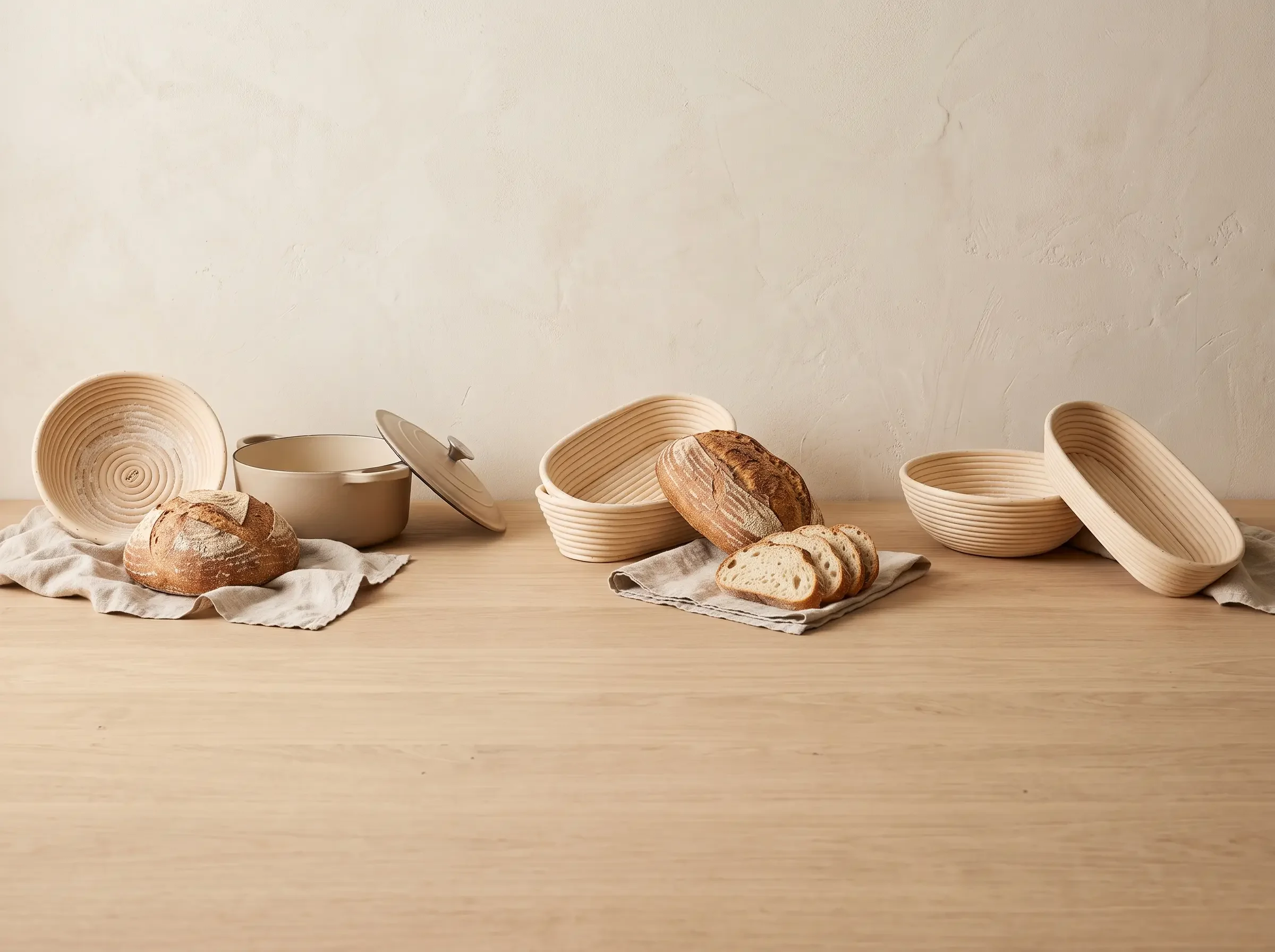
Choose the shape here, then use RattanVibe’s banneton size guide for dough capacity and the banneton material comparison for rattan or other material questions. Shape decides boule versus batard. Size decides dough fit. Material decides feel, care, breathability, and the style of basket you prefer.
Keep those decisions separate so you don’t overthink the first step. A round natural rattan banneton may be the right shape for a beginner boule, but the exact size should still come from the size guide, your dough weight, and your baking vessel.
The same rule applies to material. This article is about shape only. If you’re deciding between natural rattan, liners, or other basket materials, use the material comparison before buying.
Decision Matrix: Round, Oval, or Set
Buy round for a first boule basket, oval for deliberate batard and sandwich use, or a set when both shapes solve a real weekly baking need. If two rows describe you, choose the one tied to your baking vessel first.
| Buyer situation | Best choice | Why it fits | Product path |
|---|---|---|---|
| First-time sourdough baker | Round | Simple starting shape for classic boules | Round natural rattan banneton |
| Baker focused on sandwiches and toast | Oval | More uniform batard slices | Oval proofing basket |
| Baker using only a round Dutch oven | Round | More direct vessel compatibility | Natural color banneton |
| Weekly baker alternating loaf styles | Set | Useful flexibility for boules and batards | Round-and-oval set |
Here’s the decisive version: if you’re unsure, buy round first. It’s the safer starter shape and pairs well with the most common home setup. Buy oval when you can clearly say, “I want batards because I use this bread for sandwiches and toast.” Buy the set when both loaves already belong in your routine.
If you’re ready to buy your first basket, see RattanVibe’s [natural rattan banneton](https://www.rattanvibe.com/shop/p/round-bread-proofing-basket-natural-color) for a round, natural-color option with a liner included. Choose RattanVibe’s oval proofing basket if your goal is batards and toaster-friendly slices. Choose the round-and-oval set if your baking routine already needs both.
FAQs
The better shape depends on the loaf you want, the slices you use, the vessel you own, and whether you need one shape or both. These quick answers should help if you’re still between two choices.
Is a round or oval banneton better for beginners?
A round banneton is better for most beginners because it supports a classic boule and pairs naturally with many round Dutch ovens. It also keeps the shaping routine simple. Choose oval first only if you already know you want batards for sandwiches or toast.
Can I use an oval banneton with a round Dutch oven?
You can use an oval banneton with a round Dutch oven only if the proofed loaf fits comfortably inside the pot. If the pot is tight, choose a round basket instead. For oval loaves, an oval Dutch oven or open-bake setup is usually more practical.
Which banneton shape is better for sandwich bread?
An oval banneton is usually better for sandwich-style use because it creates a batard. Batards tend to produce more consistent slices than round boules, so they’re easier to toast, stack, spread, and pack.
Do I need both round and oval bannetons?
You don’t need both unless you bake often enough to use both. A round basket is enough for classic boules. Add oval when you want batards. Choose a set when you bake weekly, rotate loaf styles, or proof multiple loaves.
Is a boule or batard easier to start with?
A boule is easier for many beginners because the shape is simple and forgiving. A batard isn’t necessarily difficult, but it asks for a longer shaping pattern and a baking vessel that fits the loaf. If you want the least complicated first basket, choose round.