
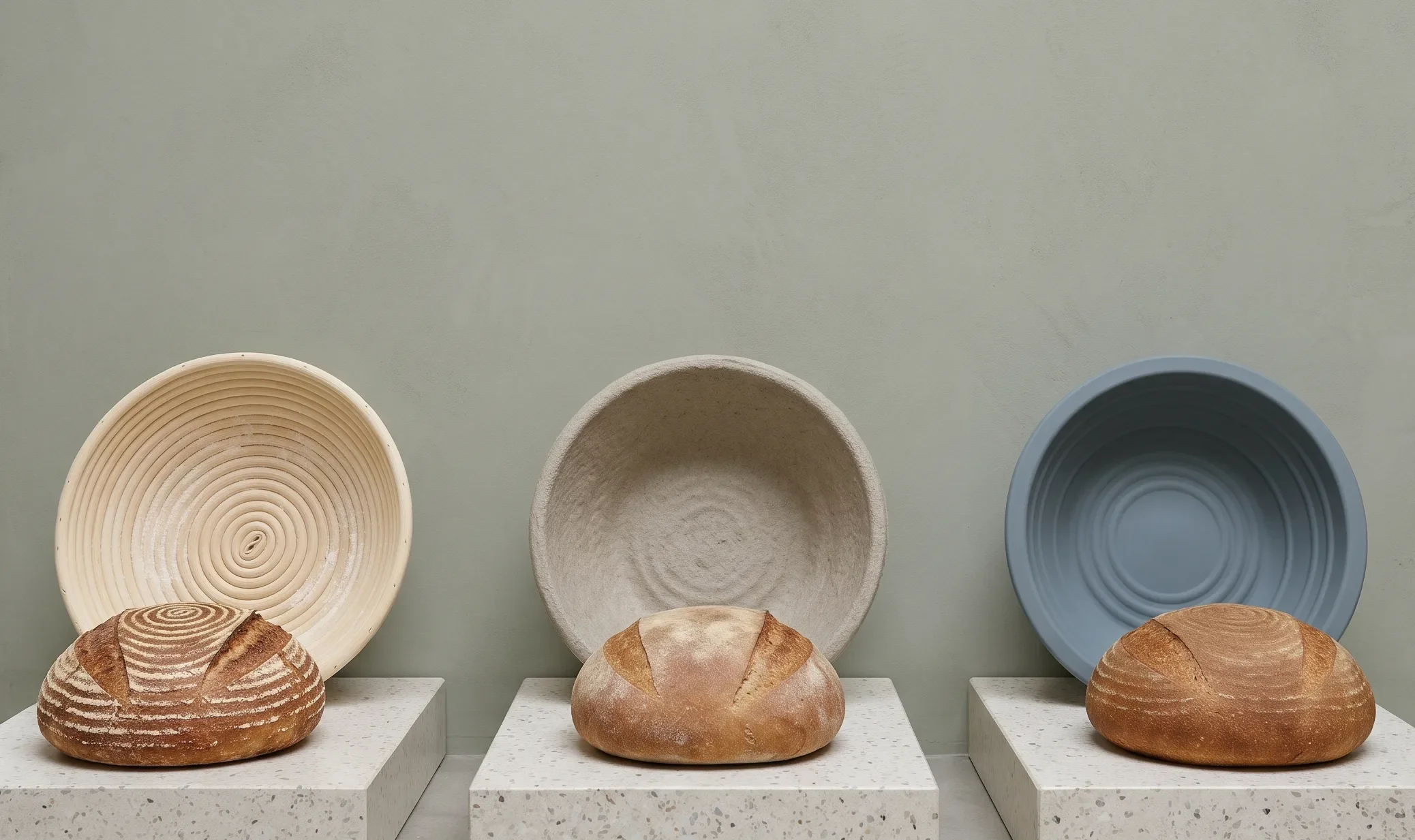
If you are comparing proofing basket materials, the main decision is often rattan vs wood pulp banneton—but silicone proofing baskets are now another practical option for bakers who prioritize flexible storage and easy washing.
For most home sourdough bakers, natural rattan remains the best overall choice. It combines lightweight support, a breathable woven surface, natural character, and the classic flour-dusted spiral pattern associated with artisan loaves.
Wood pulp and silicone are not bad choices. They simply solve different problems. Wood pulp suits bakers who prefer a smooth, rigid molded basket. Silicone suits those who value washable, nonporous construction and compact storage more than moisture absorption or traditional crust texture.
Key takeaways
Choose rattan for the best all-around traditional banneton experience and visible spiral rings.
Choose wood pulp for a smooth, rigid, absorbent molded basket.
Choose silicone for flexible storage and easy cleaning.
Choose the material first, then use the separate size and shape guides to finish your decision.
Proofing Basket Material Checklist
Start with your highest priority:
Want classic spiral-flour rings? Choose rattan.
Want a natural, lightweight, handwoven basket? Choose rattan.
Want a smooth, rigid natural-fiber basket? Consider wood pulp.
Want a flexible basket that is easy to wash and store? Consider silicone.
Want a first banneton that balances tradition, appearance, and everyday practicality? Start with rattan.
This comparison focuses only on material. Once you choose a material, use the [banneton size guide](https://www.rattanvibe.com/blog/banneton-size-guide-dough-weight-chart) to match the basket to your dough weight and the [round vs oval banneton guide](https://www.rattanvibe.com/blog/round-vs-oval-banneton) to choose a loaf shape.
Rattan vs Wood Pulp vs Silicone Banneton Scorecard
| Buying criterion | Natural rattan | Wood pulp | Silicone |
|---|---|---|---|
| Moisture behavior | Breathable and slightly porous | Absorbent natural-fiber surface | Nonporous and does not wick moisture |
| Crust pattern | Classic spiral rings | Depends on the molded pattern | Usually smooth or lightly molded |
| Structure | Rigid but lightweight | Rigid with thicker molded walls | Flexible; support depends on the design |
| Cleaning | Dry-brush and air-dry | Dry-clean and dry thoroughly | Often washable; follow the manufacturer’s instructions |
| Storage | Keeps its basket shape | Keeps its basket shape | May collapse or nest compactly |
| Appearance | Natural, handwoven, traditional | Smooth and understated | Modern and functional |
| Best fit | Most home sourdough bakers | Bakers wanting a smooth rigid basket | Bakers prioritizing washing and storage |
| Main trade-off | Must be dried completely | Moisture-sensitive and less visually traditional | Does not wick moisture or create classic rattan rings |
The short verdict: rattan is the best fit if you want the experience most bakers expect from a banneton. Wood pulp is a credible alternative when a smooth rigid surface matters most. Silicone is a convenience-led option for bakers who prioritize washability and flexible storage.
Which Material Creates the Classic Sourdough Look?
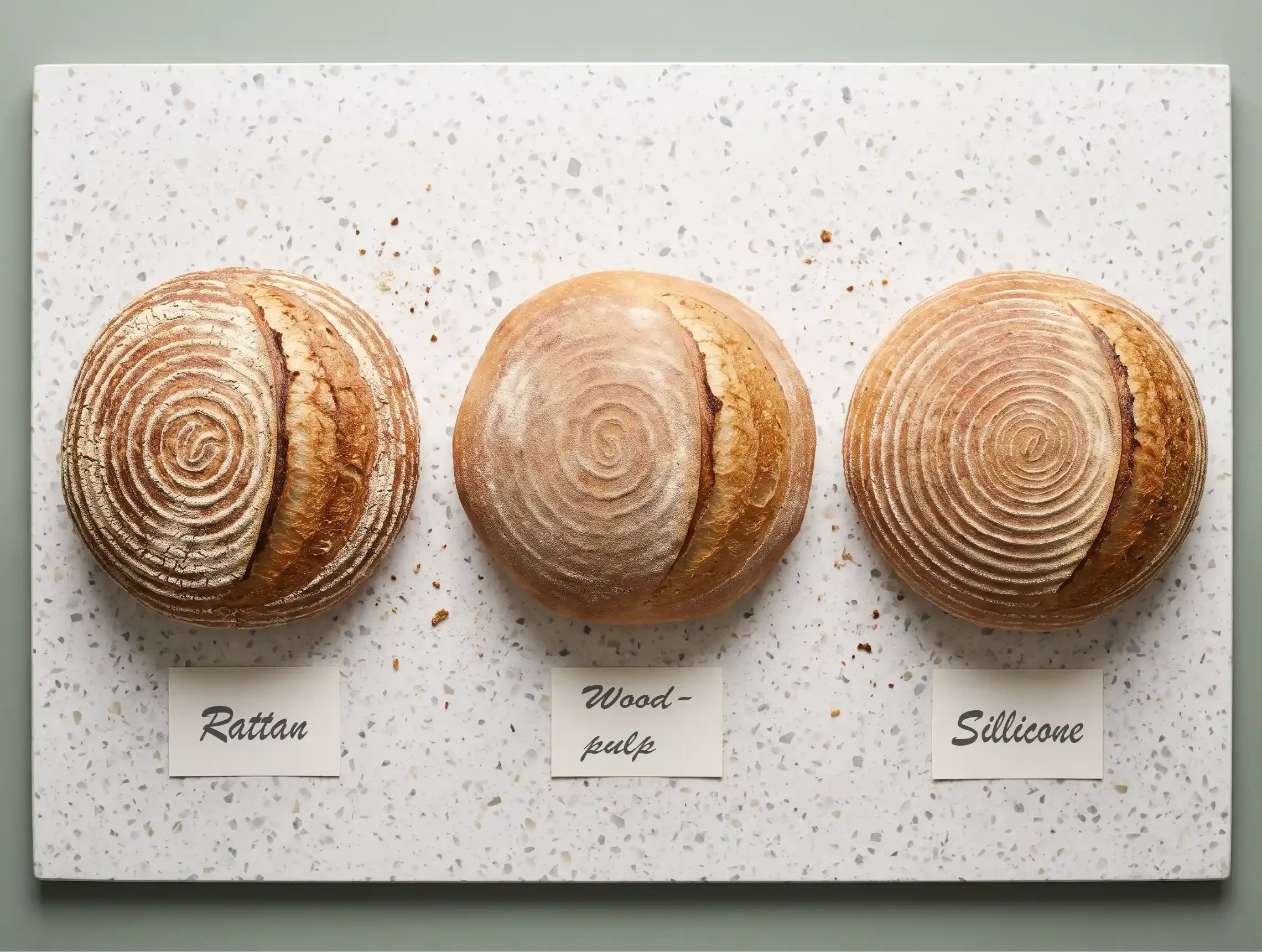
Choose rattan when the basket pattern is part of the loaf you want to bake. Its coiled, woven construction leaves the familiar spiral of pale flour lines around the crust.
That pattern gives rattan its clearest aesthetic advantage. When most people picture a banneton-proofed boule, they picture the rings left by a bare rattan basket. The basket contributes visible character before you make a single decorative score.
Wood pulp has a quieter appearance. Its surface is molded rather than woven, so any impression comes from the specific pattern pressed into the basket. It can look neat and consistent, but it does not naturally create the same handwoven identity.
Silicone proofing baskets vary by design. Some have molded ridges, while others produce a mostly smooth surface. Even when silicone includes a spiral pattern, the result may not have the same flour-catching definition as natural rattan.
A cloth liner changes the result in any rigid basket. With rattan, a liner softens or removes most of the spiral imprint and creates a smoother surface for decorative scoring. Without the liner, the woven pattern becomes part of the finished loaf.
Best for crust aesthetics: rattan.
Which Banneton Handles Surface Moisture Best?
Rattan and wood pulp interact with dough moisture differently from silicone because they are porous natural materials.
Rattan provides a breathable woven contact surface. When prepared and floured correctly, it supports the shaped dough while helping its exterior remain suitable for turning out and scoring. It is not a guaranteed nonstick solution—hydration, fermentation, shaping, and flouring still matter—but it delivers the traditional banneton behavior many bakers want.
Wood pulp is also moisture-sensitive and absorbent. Its thick molded fiber surface can appeal to bakers who want a rigid basket without rattan’s open weave. It must be kept dry between uses and should be handled according to its manufacturer’s care instructions.
Silicone is nonporous. It does not absorb or wick moisture from the dough surface. That makes silicone easy to wash, but it also means moisture remains at the contact surface. Depending on the dough and basket design, the baker may need an appropriate flour barrier or liner to reduce sticking.
No basket material guarantees better oven spring, crumb, crust, or release. Those outcomes also depend on dough strength, hydration, fermentation, shaping, proofing time, and handling.
Best balance for traditional home proofing: rattan.
Which Proofing Basket Is Easiest to Clean?
Silicone generally offers the simplest washable routine. Because it is nonporous, residue does not soak into the material in the same way it can with natural fiber. Some silicone baskets are dishwasher-safe, but always follow the specific manufacturer’s instructions rather than assuming every product is.
Care differs by material:
Rattan: Tap out loose flour, dry-brush residue, and let the basket air-dry completely.
Wood pulp: Remove dry residue carefully and keep the basket away from unnecessary water.
Silicone: Wash according to the manufacturer’s directions and dry it before storage.
Plastic used to fill the “easy-clean” role in many material comparisons, but silicone is a more relevant modern alternative when shoppers want flexible, reusable proofing equipment. It can be folded or nested in many designs, making it useful in kitchens with limited storage.
That convenience comes with a trade-off: silicone does not provide rattan’s moisture behavior or traditional woven crust pattern. If your concern is that rattan care sounds difficult, the routine is simpler than washing a bowl—brush it dry and let it air.
For complete care instructions, see the [banneton cleaning guide](https://www.rattanvibe.com/blog/how-to-clean-banneton-basket).
Best for washable convenience: silicone. Best for traditional low-effort care: rattan.
Do You Prefer a Rigid Basket or Flexible Silicone?
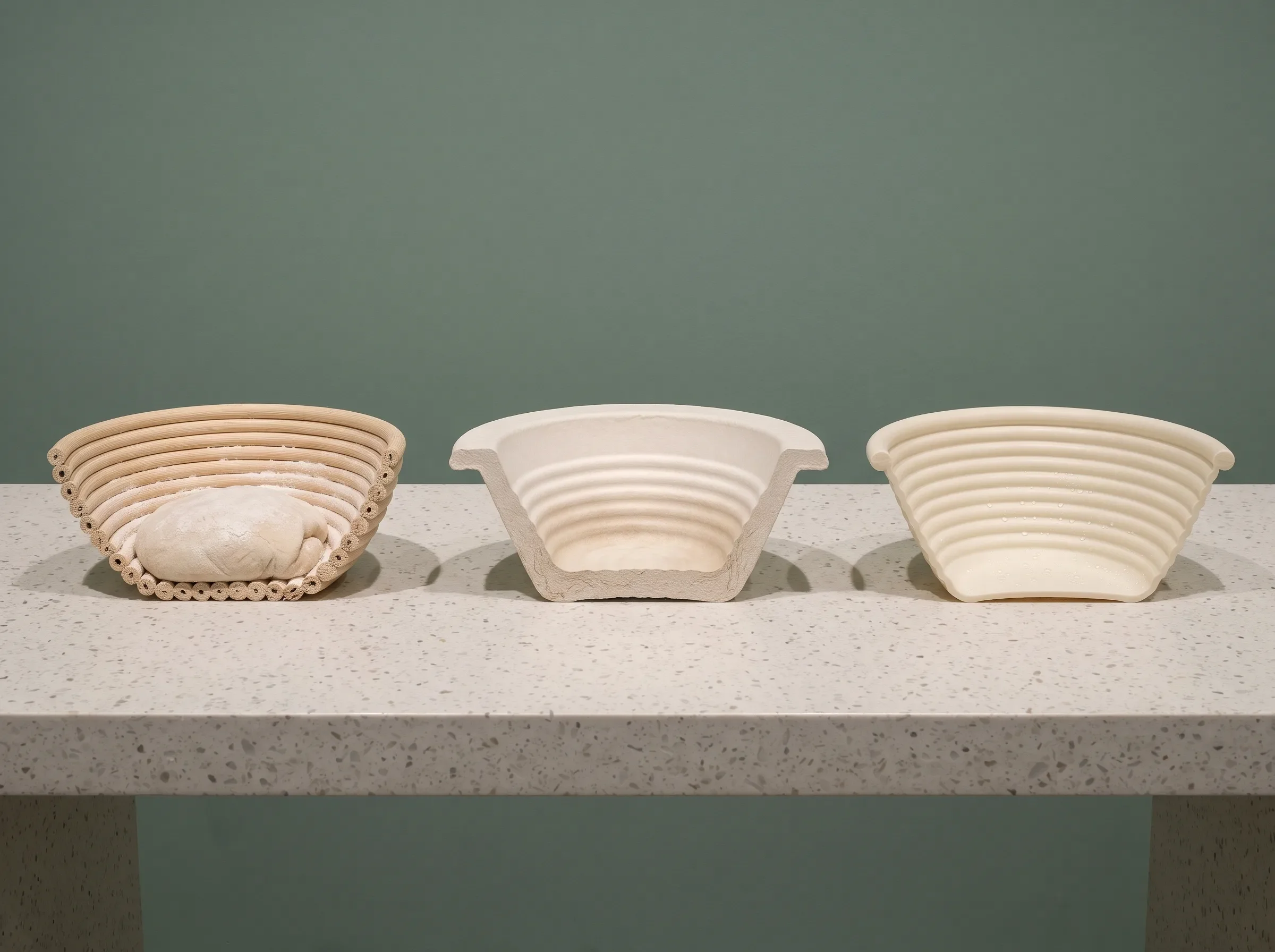
Rattan and wood pulp are rigid. They hold their basket shape while supporting dough through its final proof. Rattan achieves that structure with lightweight woven cane; wood pulp uses a thicker molded fiber body.
Silicone is flexible. That can make it easier to store, but the amount of sidewall support depends on the product design. A very soft silicone basket may need a tray, bowl, or rigid outer support when it is moved. A reinforced silicone model may behave more like a conventional basket.
This distinction matters because “silicone” describes a material, not one universal construction. Check whether the product:
holds its shape when filled with dough;
includes a rigid frame or base;
is intended only for proofing or also marketed for baking;
can safely enter a dishwasher, freezer, or oven;
requires a liner or external support.
Do not assume that all silicone proofing baskets are oven-safe. Temperature limits and intended use vary, and a banneton is normally a proofing tool rather than bakeware.
Best for dependable lightweight structure: rattan. Best for compact storage: silicone.
Which Material Releases Dough Most Easily?
Material alone does not determine release. A smooth basket can still stick, and a textured basket can release cleanly when the dough and basket are prepared correctly.
Rattan’s grooves hold flour and gradually develop a conditioned working surface. The trade-off is that very wet dough can catch in the weave if the basket is under-floured or the dough is overproofed. The included cloth liner provides a smoother backup for high-hydration dough or bakers who want extra release confidence.
Wood pulp has a smoother molded surface and is often used without a liner. It may appeal to bakers whose priority is a uniform contact surface, but it still requires appropriate flouring and dry care.
Silicone may be marketed as nonstick, but wet fermented dough can cling to almost any under-prepared surface. Because silicone does not absorb moisture, its actual release depends on the finish, dough hydration, flour barrier, liner use, and proofing time.
Choose rattan for woven texture and visual definition. Choose wood pulp for a smooth rigid surface. Choose silicone for flexible, washable convenience—not because “nonstick” guarantees a perfect release.
Which Material Looks and Feels Best in the Kitchen?
Natural rattan has the strongest traditional identity. Its unbleached color, woven lines, and lightweight feel suit the slower, tactile process of sourdough baking. It also makes an appealing gift because it looks like a crafted baking tool rather than a storage container.
Wood pulp is understated. Its molded form looks clean and functional, but it does not offer the same woven warmth.
Silicone looks modern and utilitarian. It is available in different colors and can be practical in a compact kitchen, but it may not appeal to bakers trying to reduce synthetic materials or create a traditional bread-making setup.
Sustainability claims require care. A natural material is not automatically sustainable in every supply chain, and a reusable silicone product is not automatically wasteful. Treat this as a personal material preference unless a manufacturer provides verifiable sourcing, production, and lifespan information.
Best for natural appearance and giftability: rattan.
Which Banneton Material Should You Buy?
Choose based on the job you need the basket to do:
Choose natural rattan if you want the best all-around traditional experience, classic spiral rings, breathable woven construction, lightweight support, and natural appearance.
Choose wood pulp if you specifically prefer a smooth, rigid, molded natural-fiber basket.
Choose silicone if washable convenience, flexible storage, and modern utility matter more than moisture absorption or classic crust texture.
For an undecided first-time buyer, rattan remains the clearest starting point. It covers the most common reasons people buy a banneton: supporting shaped dough, creating a recognizable crust pattern, and adding traditional character to the proofing process.
After choosing the material, select the right capacity and loaf shape. Do not use material as a substitute for sizing. The correct next steps are the [dough-weight size chart](https://www.rattanvibe.com/blog/banneton-size-guide-dough-weight-chart) and the [round vs oval comparison](https://www.rattanvibe.com/blog/round-vs-oval-banneton).
Final Verdict: Why We Recommend Rattan
For most home sourdough bakers, rattan offers the strongest combination of traditional proofing behavior, visible spiral texture, lightweight structure, natural warmth, and straightforward dry care.
The trade-off is simple: it must be dried fully and should not be washed like silicone. If your routine depends on frequent washing or collapsible storage, silicone may suit you better. If you want a smooth molded natural-fiber surface, wood pulp deserves consideration.
But if you want the classic banneton look and experience, rattan is the most direct choice.
RattanVibe’s [natural rattan banneton](https://www.rattanvibe.com/shop/p/round-bread-proofing-basket-natural-color) combines handwoven character with an included liner, allowing you to choose between visible rattan rings and a smoother lined proof.
FAQs
Is wood pulp better than rattan for sourdough?
Not universally. Wood pulp may suit bakers who want a smooth molded surface. Rattan is the better fit for classic spiral definition, natural woven texture, and the traditional banneton experience.
Are silicone proofing baskets good for sourdough?
They can be. Silicone is washable, nonporous, and often easy to store. However, it does not wick moisture, may need rigid support depending on its design, and usually does not create the same crust pattern as rattan.
Is silicone better than plastic for a proofing basket?
Silicone is often more flexible and easier to collapse or nest than rigid plastic. Actual durability, cleaning instructions, temperature limits, and food-contact suitability depend on the individual product.
What is the best banneton material for beginners?
Natural rattan is the best starting point for most beginners who want a traditional banneton. Silicone may suit beginners who care more about washable convenience than crust pattern or moisture behavior.
Does a rattan banneton need a liner?
No. Use bare rattan for stronger spiral definition or the included liner for a smoother dough surface and extra release confidence.
Can I bake bread inside a silicone proofing basket?
Only if the manufacturer explicitly identifies that product as oven-safe and provides a suitable temperature rating. Many proofing baskets are intended only for proofing, regardless of material.